Chemical Treatment for Aquatic Invasives
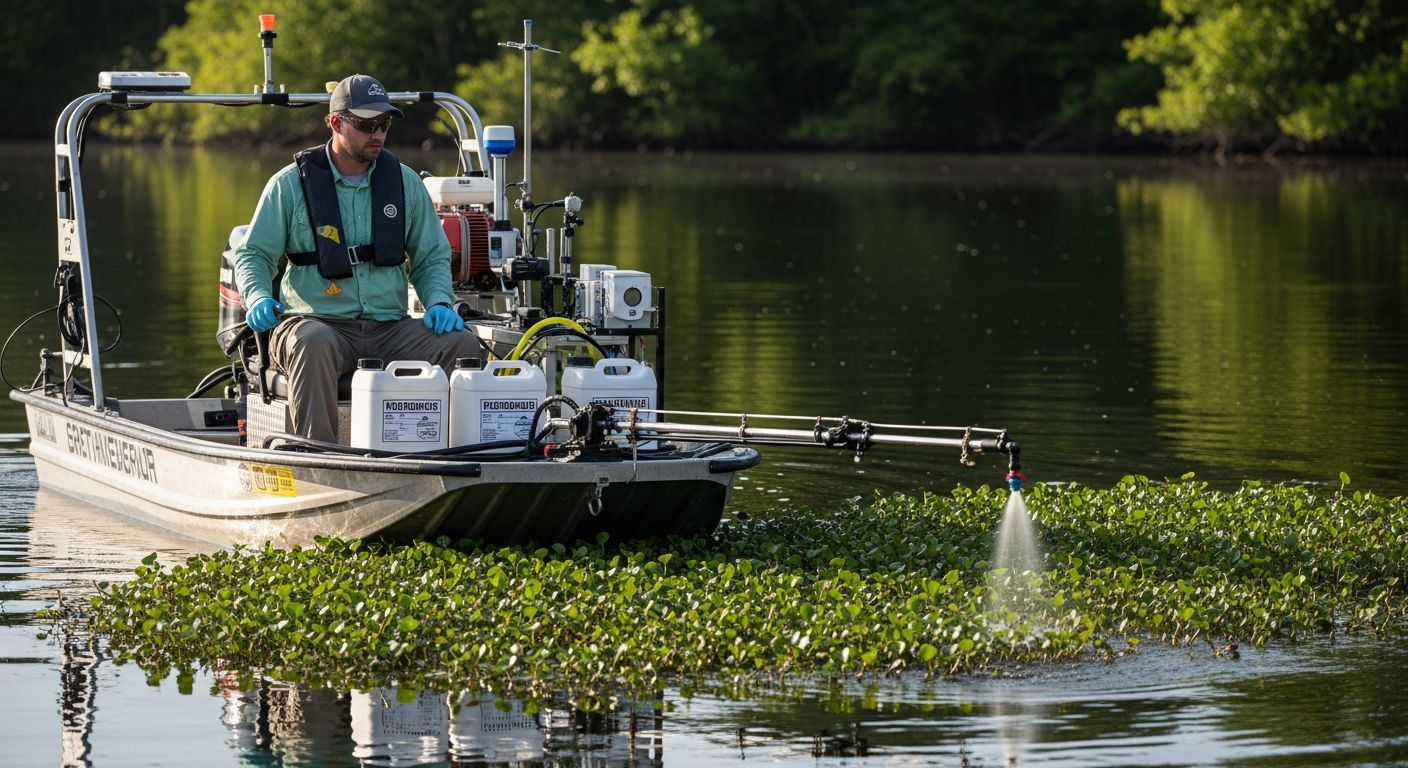
Aquatic Herbicides Overview
Chemical treatment utilizing EPA-approved aquatic herbicides is one of the most common and effective methods for managing large-scale invasive plant infestations. When applied correctly by licensed professionals, these treatments can selectively target invasive species like Hydrilla while minimizing impact on native ecology.
Types of Aquatic Herbicides
Contact Herbicides
These act quickly, destroying the plant tissue they come into contact with. They are excellent for rapid knockdown of dense canopies but generally do not kill the root system, meaning plants will eventually regrow. Examples include Diquat and Endothall.
Systemic Herbicides
These are absorbed by the plant and translocated throughout its tissues, including the roots. They act slower than contact herbicides but offer longer-lasting control by killing the entire plant. Examples include Fluridone and Imazamox.
Application and Regulations
Aquatic herbicide application requires strict adherence to label instructions and often requires state or local permits. The choice of chemical, application rate, and timing are heavily dependent on water flow, target species, and water use restrictions (e.g., drinking water, irrigation).
For specific information regarding Hydrilla, see our detailed review of Hydrilla Herbicides.
References
Information presented on this page is supported by peer-reviewed research, federal agencies, and state resource management programs.
- U.S. Geological Survey (USGS) – Nonindigenous Aquatic Species Databasehttps://nas.er.usgs.gov
- U.S. Army Corps of Engineers – Aquatic Plant Control Research Programhttps://www.erdc.usace.army.mil
- NOAA Aquatic Invasive Species Programhttps://www.noaa.gov