Hydrilla Growth Rate: How Fast Does It Spread?
Discover the explosive growth rate of hydrilla. Learn how fast it spreads, how it forms dense canopies, and why it outcompetes native aquatic plants.
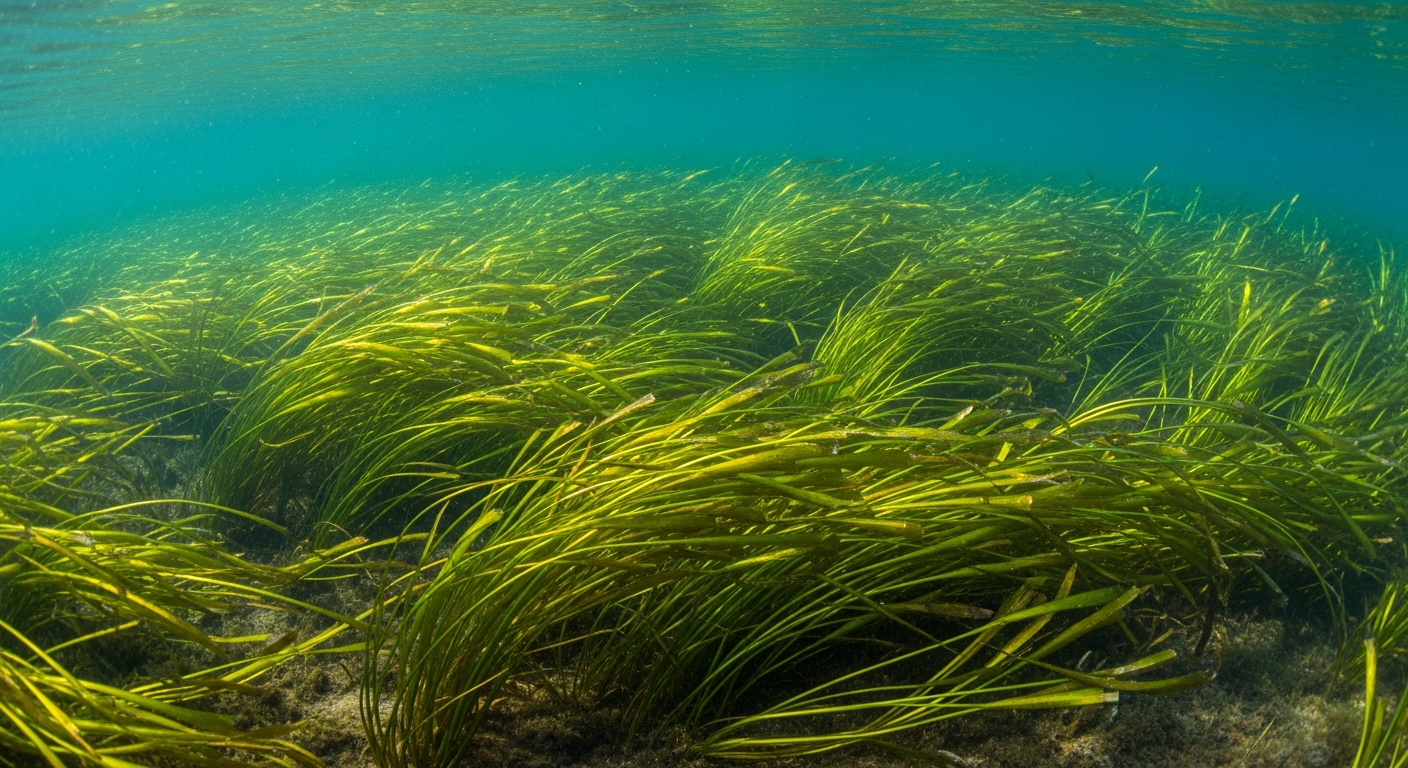
Hydrilla Growth Rate: How Fast Does It Spread?
When ecologists label Hydrilla verticillata as one of the world's most invasive aquatic weeds, its staggering growth rate is the primary reason. Understanding exactly how fast hydrilla spreads—and the biological mechanisms that fuel this growth—is essential for grasping why early intervention is so critical.
Unlike many native aquatic plants that require strict environmental conditions and plenty of sunlight to thrive, hydrilla has evolved a set of physiological advantages that allow it to dominate a waterbody in a single season.
The "One Inch Per Day" Phenomenon
During the peak growing season—typically late spring through mid-summer when water temperatures rise—hydrilla stems can elongate at a rate of up to one inch (2.5 cm) per day.
This rapid vertical growth is driven by the plant's urgency to reach the water's surface. Once the stems hit the surface, they do not stop growing. Instead, they branch profusely outward, creeping across the top of the water to form thick, tangled, impenetrable mats.
- Low Light Advantage: Hydrilla can begin photosynthesizing early in the morning in very low light—requiring only 1% of full sunlight. This allows it to start growing at deeper depths than native plants.
- The Canopy Effect: By growing rapidly to the surface and branching out, hydrilla intercepts the sunlight before it can penetrate the water column. The resulting canopy literally shades out and starves competing native vegetation.
- Biomass Production: A single acre of a lake heavily infested with hydrilla can hold over 10 tons of wet plant biomass.
Speed of Spread: Fragmentation
While vertical growth explains how hydrilla dominates the water column, fragmentation explains how fast it spreads laterally across a lake—and into neighboring waterbodies.
Hydrilla stems are highly brittle. When chopped by a boat propeller, cut by a poorly managed mechanical harvester, or broken by strong wave action, the plant shatters into thousands of pieces.
Almost any fragment containing a single leaf node is viable. These fragments float on the water currents, drift into new coves or marinas, sink, and immediately sprout new roots and shoots. This allows a localized patch of hydrilla to spread across a massive reservoir in a matter of weeks.
Exponential Spread via Tubers
While fragments spread hydrilla geographically, subterranean tubers ensure its chronological spread. A single hydrilla plant can produce hundreds of tubers in a single season.
In severely infested lakes, researchers have measured tuber densities exceeding 5,000 tubers per square meter of sediment. Because these tubers can remain dormant and viable for up to 7 years, the potential for regrowth is enormous. Even if an herbicide treatment successfully kills 100% of the standing biomass, the growth rate will seemingly reset to zero, only to explode again the following spring when the tuber bank sprouts.
Explore Related Topics
References
Information presented on this page is supported by peer-reviewed research, federal agencies, and state resource management programs.
- U.S. Geological Survey (USGS) – Nonindigenous Aquatic Species Databasehttps://nas.er.usgs.gov
- U.S. Army Corps of Engineers – Aquatic Plant Control Research Programhttps://www.erdc.usace.army.mil
- NOAA Aquatic Invasive Species Programhttps://www.noaa.gov