Biological Control in Aquatic Ecosystems
What is Biological Control?
Biological control (or biocontrol) is the introduction of natural predators, herbivores, or pathogens to reduce the population of an invasive species to manageable levels. This approach aims for long-term, sustainable management rather than immediate eradication.
Common Biological Agents
Triploid Grass Carp
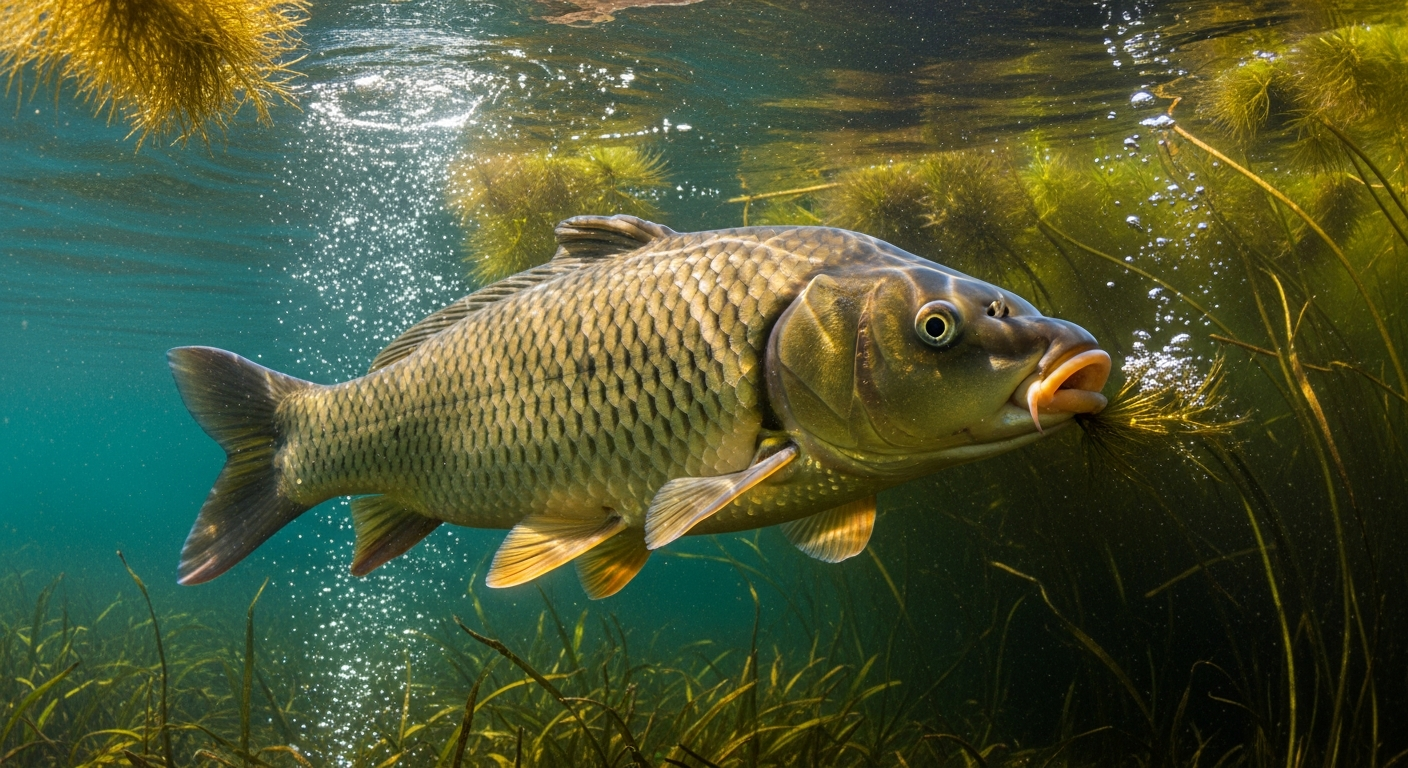
The most widely used biological control agent for submerged aquatic weeds, including Hydrilla, is the sterile (triploid) grass carp. These voracious herbivores can consume massive amounts of vegetation daily. See our detailed guide on Hydrilla and Grass Carp.
Insects
Several insect species, including the Hydrilla leaf-mining fly (Hydrellia pakistanae) and the tuber weevil (Bagous affinis), have been researched and deployed in specific regions to help suppress hydrilla growth by damaging leaf tissue and survival structures.
Benefits and Challenges
- Benefits: Long-term control, lower cost over time compared to repeated chemical applications, reduced chemical loading in waterbodies.
- Challenges: Slow to show results, potential for overgrazing leading to loss of native habitat, strict regulations surrounding the import and transport of biological agents.
Always consult with local wildlife and fisheries departments before considering biological control options. You can read more about comprehensive management plans in our Control Overview.
References
Information presented on this page is supported by peer-reviewed research, federal agencies, and state resource management programs.
- U.S. Geological Survey (USGS) – Nonindigenous Aquatic Species Databasehttps://nas.er.usgs.gov
- U.S. Army Corps of Engineers – Aquatic Plant Control Research Programhttps://www.erdc.usace.army.mil
- NOAA Aquatic Invasive Species Programhttps://www.noaa.gov