Grass Carp for Hydrilla Control
Overview of biological control using triploid grass carp (Ctenopharyngodon idella) for managing Hydrilla verticillata infestations in freshwater systems.
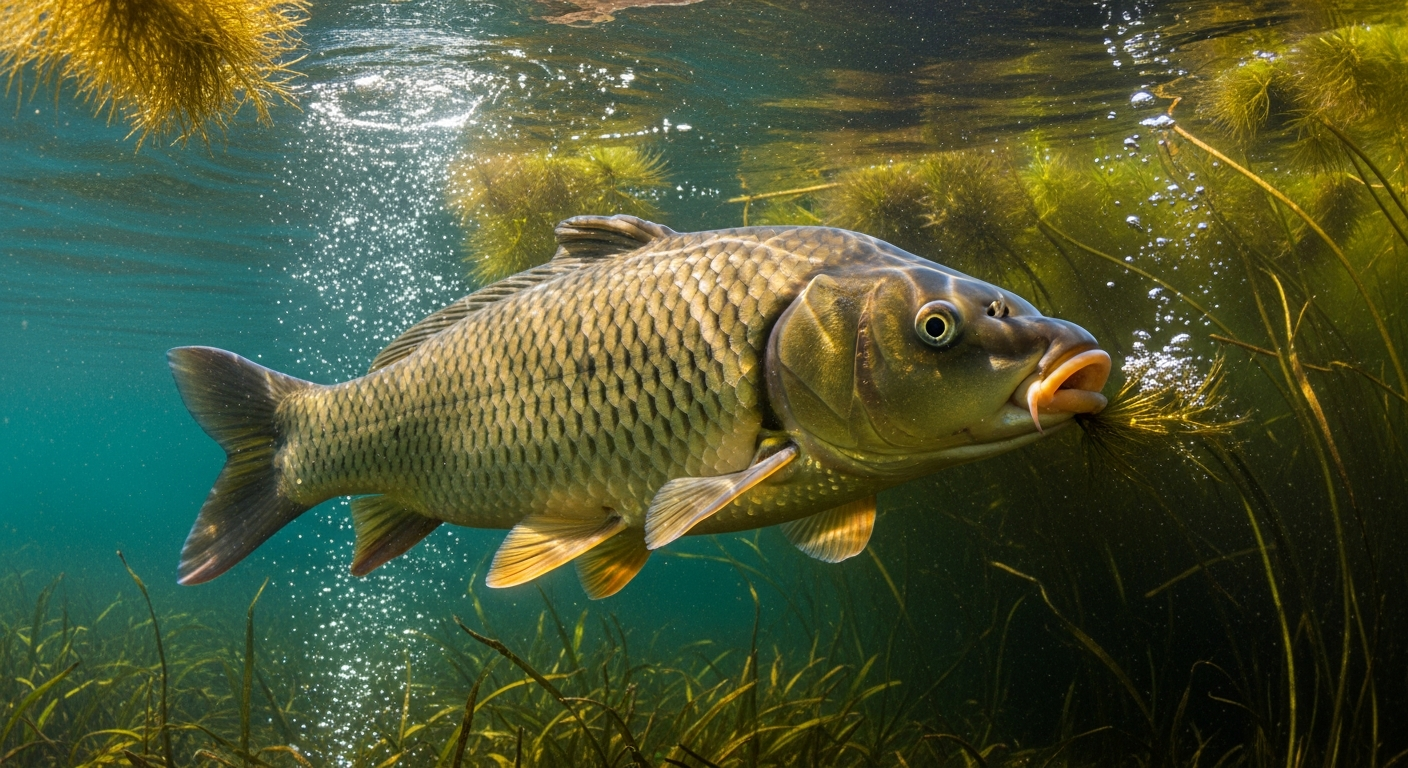
Biological Control: The Triploid Grass Carp
One of the most cost-effective and environmentally sustainable methods for long-term hydrilla management is the use of the Triploid Grass Carp (Ctenopharyngodon idella).
Unlike chemical herbicides that require repeated, expensive applications, grass carp provide continuous, biological vegetation suppression simply by grazing. They act as underwater lawnmowers, eating hydrilla constantly during the warm growing season.
Why "Triploid" Grass Carp Are Required
Grass carp are native to large Asian rivers and are considered an invasive species in North America if allowed to breed. In the 1980s, scientists discovered a way to shock grass carp eggs to induce "triploidy" (giving them three sets of chromosomes instead of two).
- Sterility: Triploid grass carp are 100% sterile and cannot reproduce.
- Legal Requirements: In almost all U.S. states where grass carp are legal, only certified triploid fish are allowed to be stocked.
- Permits: Stocking triploid grass carp requires a permit from the state wildlife or environmental agency (e.g., FWC in Florida, DEC in New York). A biologist must determine the correct stocking rate before a permit is issued.
Effectiveness Against Hydrilla
Grass carp preferentially consume hydrilla over many other native aquatic plants. When young (under 12 inches), they can consume their own body weight in hydrilla every single day.
However, there are limitations to relying solely on grass carp:
- Slow Results: If a lake is already 100% choked with a dense hydrilla canopy, grass carp cannot eat it fast enough. They are best used as a preventative measure, or stocked after an initial herbicide treatment has knocked back the heavy biomass.
- No Effect on Tubers: Grass carp eat the vegetative stems and leaves. They do not dig into the mud to eat hydrilla tubers. Hydrilla will continue to sprout from the sediment, meaning the fish must be continually present to graze the new sprouts.
- Lifespan and Efficiency: Grass carp live for 10-15 years, but their voracious appetite slows down significantly after age 5. Lakes often require "restocking" every 4 to 5 years to maintain grazing pressure.
The Danger of Overstocking
Stocking rates typically range from 5 to 20 fish per vegetated acre, depending on the severity of the infestation.
Overstocking grass carp is a serious ecological risk. If there are too many fish and they consume all the hydrilla, they will not stop eating. They will turn to native, desirable plants (like pondweed, eelgrass, and lilies). Stripping a lake of all vegetation destroys the habitat required by juvenile bass, baitfish, and aquatic insects, ultimately ruining the sport fishery and crashing water quality.
References
Information presented on this page is supported by peer-reviewed research, federal agencies, and state resource management programs.
- U.S. Geological Survey (USGS) – Nonindigenous Aquatic Species Databasehttps://nas.er.usgs.gov
- U.S. Army Corps of Engineers – Aquatic Plant Control Research Programhttps://www.erdc.usace.army.mil
- NOAA Aquatic Invasive Species Programhttps://www.noaa.gov