Hydrilla Impact on Fish Safety and Habitats
Understand how hydrilla affects fish safety, water quality, and aquatic habitats. Learn about the delicate balance between fish cover and lethal oxygen depletion.
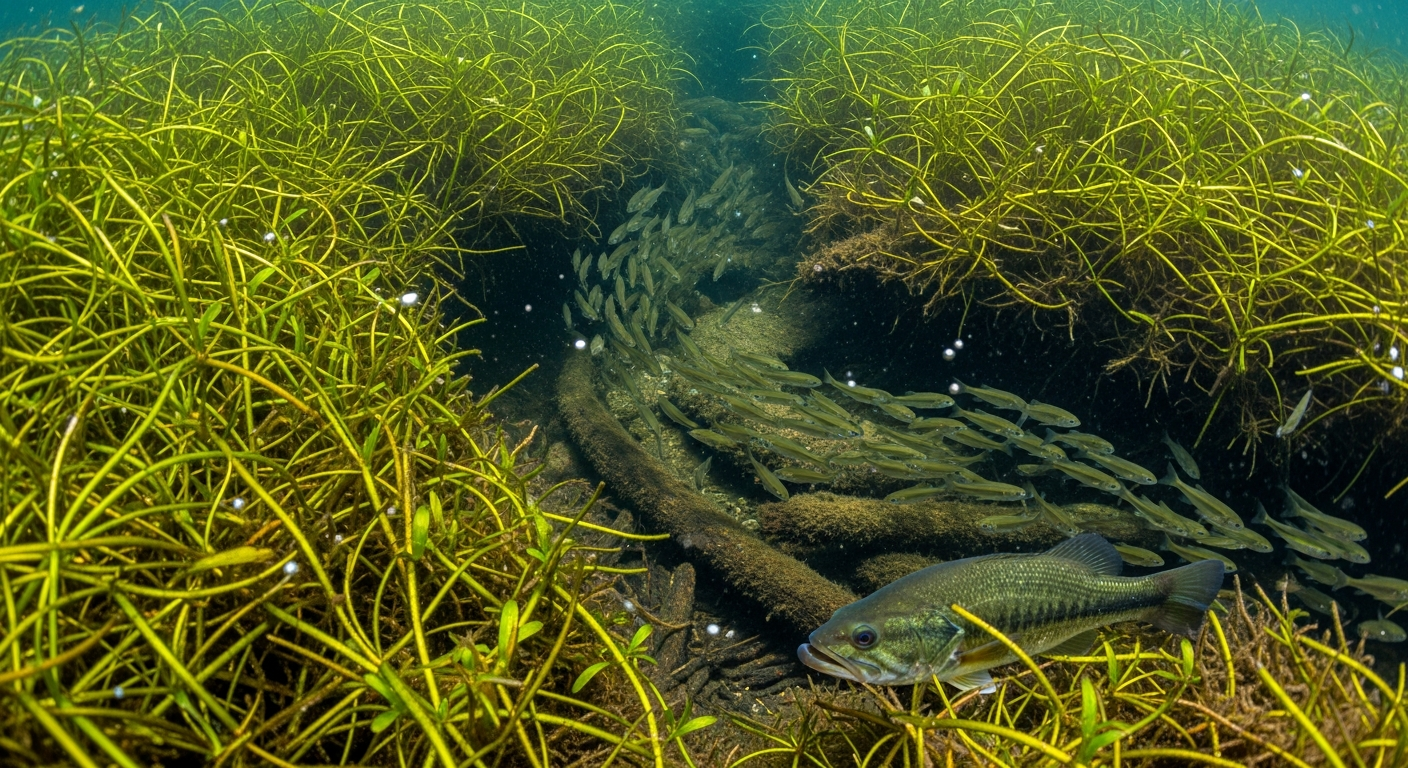
The Dual Nature of Hydrilla as Fish Habitat
When assessing the impact of Hydrilla verticillata on fish safety, biologists look at a complex scale. At low densities, hydrilla can actually benefit a fishery. At high densities, it becomes a lethal threat.
The structural complexity of hydrilla stems provides excellent hiding places for juvenile fish and baitfish, protecting them from avian predators and larger fish. It also serves as an ambush structure for predatory sportfish like largemouth bass.
The Threat: Oxygen Depletion
The primary safety threat hydrilla poses to fish is suffocation via dissolved oxygen (DO) depletion. This occurs in two main ways:
- Nighttime Respiration: Plants produce oxygen during the day via photosynthesis, but they consume oxygen at night. A lake choked with massive hydrilla biomass can see its oxygen levels plummet to dangerously low levels just before dawn.
- Decomposition (BOD): When hydrilla dies en masse, whether from natural seasonal cycles or rapid herbicide treatment, heterotrophic bacteria break down the rotting plant matter. These bacteria consume massive amounts of oxygen, creating a high Biological Oxygen Demand (BOD) that can rapidly kill thousands of fish.
Temperature and pH Swings
Thick hydrilla canopies floating on the surface absorb sunlight and trap heat. This creates artificially warm, stagnant layers of water near the surface, while shading the water below.
Furthermore, intense daytime photosynthesis by heavy hydrilla infestations strips carbon dioxide from the water, which can cause the pH to spike to highly alkaline levels (sometimes exceeding pH 10). These wild swings in temperature and pH induce chronic stress in fish populations, lowering their immunity to disease.
Explore Related Topics
References
Information presented on this page is supported by peer-reviewed research, federal agencies, and state resource management programs.
- U.S. Geological Survey (USGS) – Nonindigenous Aquatic Species Databasehttps://nas.er.usgs.gov
- U.S. Army Corps of Engineers – Aquatic Plant Control Research Programhttps://www.erdc.usace.army.mil
- NOAA Aquatic Invasive Species Programhttps://www.noaa.gov