How to Kill Hydrilla (Effective Control & Treatment Methods)
A comprehensive guide explaining how to kill hydrilla in ponds, lakes, and reservoirs using herbicides, grass carp, and integrated invasive species management strategies.
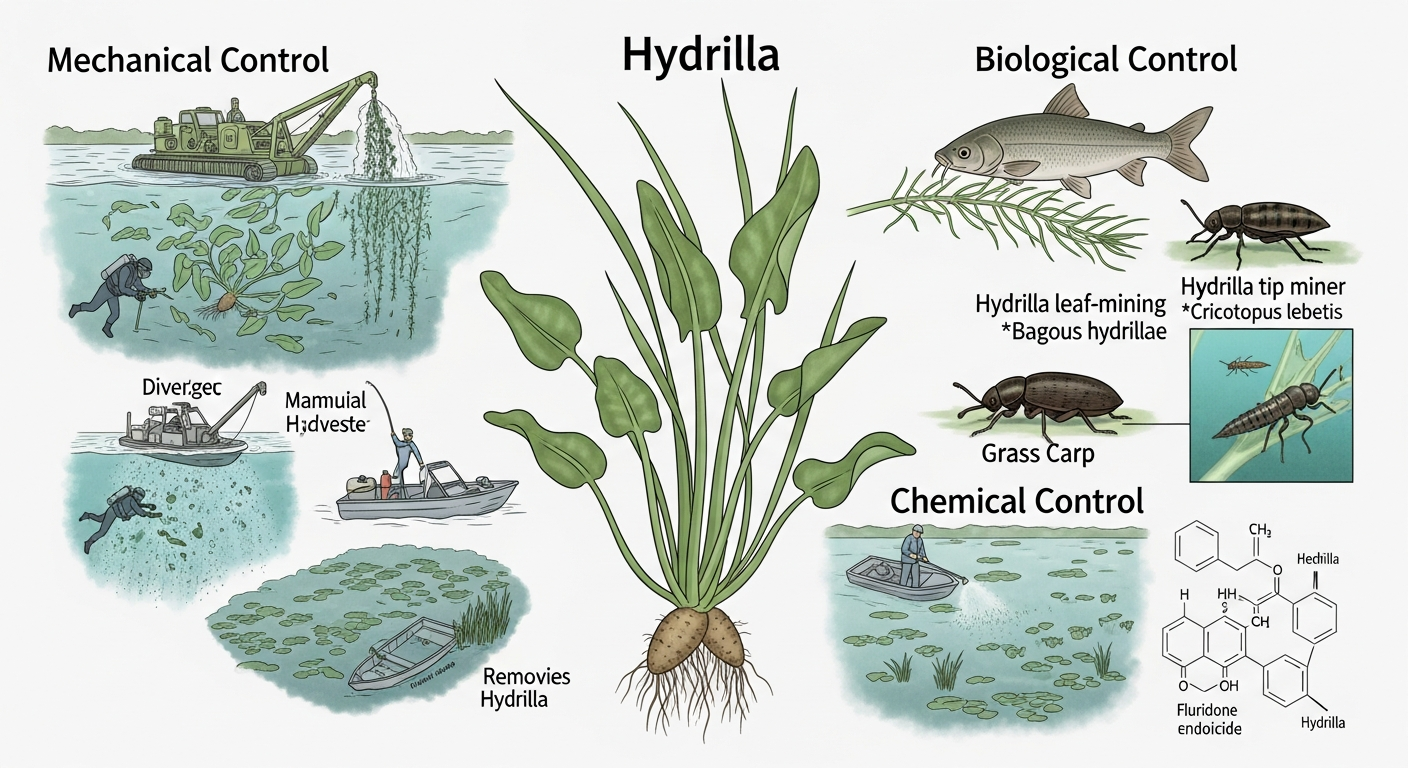
How to Kill Hydrilla in Ponds and Lakes
When property owners discover an infestation, the immediate question is always "how to kill hydrilla?" Unfortunately, hydrilla control requires more than simply cutting or raking vegetation.
Because Hydrilla verticillata reproduces aggressively through subterranean tubers, turions, and stem fragmentation, single-season "quick fixes" rarely work. Instead, long-term suppression strategies are necessary.
The most effective hydrilla treatment methods combine chemical, biological, and mechanical approaches depending on the size of the infestation and the specific characteristics of the waterbody.
Best Herbicides to Kill Hydrilla
Aquatic herbicides are the most common and immediate way to kill hydrilla. They fall into two main categories:
- Systemic Herbicides (e.g., Fluridone, ProcellaCOR): These are absorbed by the plant and translocated down into the root system. They are the most effective way to provide long-term control because they can severely stunt or kill the entire plant.
- Contact Herbicides (e.g., Diquat, Endothall): These rapidly burn off the top layer of vegetation they touch. While they clear the surface quickly, they often leave the roots and tubers intact, allowing for rapid regrowth.
Always consult state aquatic plant management guidelines before applying any herbicide. For a detailed product comparison, see our guide to the best herbicides for hydrilla control.
Using Grass Carp to Control Hydrilla
Sterile (triploid) grass carp provide an excellent long-term biological control method. Grass carp naturally feed on submerged aquatic vegetation, and hydrilla is often one of their preferred food sources.
While grass carp will not rapidly "kill" an existing hydrilla canopy, they provide constant, multi-year grazing pressure that prevents the hydrilla from reaching the surface. Stocking density is critical and heavily regulated by state wildlife agencies. Learn more in our grass carp guide.
Mechanical Hydrilla Removal
Mechanical harvesting involves using large, specialized boats to cut and gather the hydrilla mats. This instantly restores recreational access and removes the physical plant biomass (preventing it from rotting in the lake and depleting oxygen).
However, harvesting is much like mowing a lawn—the roots remain, and the hydrilla will grow back. Furthermore, if the cut fragments are not carefully contained, they can drift away and establish new colonies. Therefore, mechanical removal is best used in combination with chemical treatments.
A Warning on "Homemade" Hydrilla Killers
Many desperate pond owners attempt to use agricultural herbicides (like standard Roundup), bleach, salt, or heavy copper sulfate doses to kill hydrilla. Do not do this.
Using non-aquatic approved chemicals in a waterbody is a violation of federal law, highly toxic to fish and amphibians, and often completely ineffective against hydrilla tubers. Stick to EPA-registered aquatic herbicides or hire a professional lake management service.
References
Information presented on this page is supported by peer-reviewed research, federal agencies, and state resource management programs.
- U.S. Geological Survey (USGS) – Nonindigenous Aquatic Species Databasehttps://nas.er.usgs.gov
- U.S. Army Corps of Engineers – Aquatic Plant Control Research Programhttps://www.erdc.usace.army.mil
- NOAA Aquatic Invasive Species Programhttps://www.noaa.gov