Economic Damage of Hydrilla on Local Economies
Explore the macro-economic impact of hydrilla, including lost tourism revenue, state management budgets, depressed real estate values, and infrastructure damage.
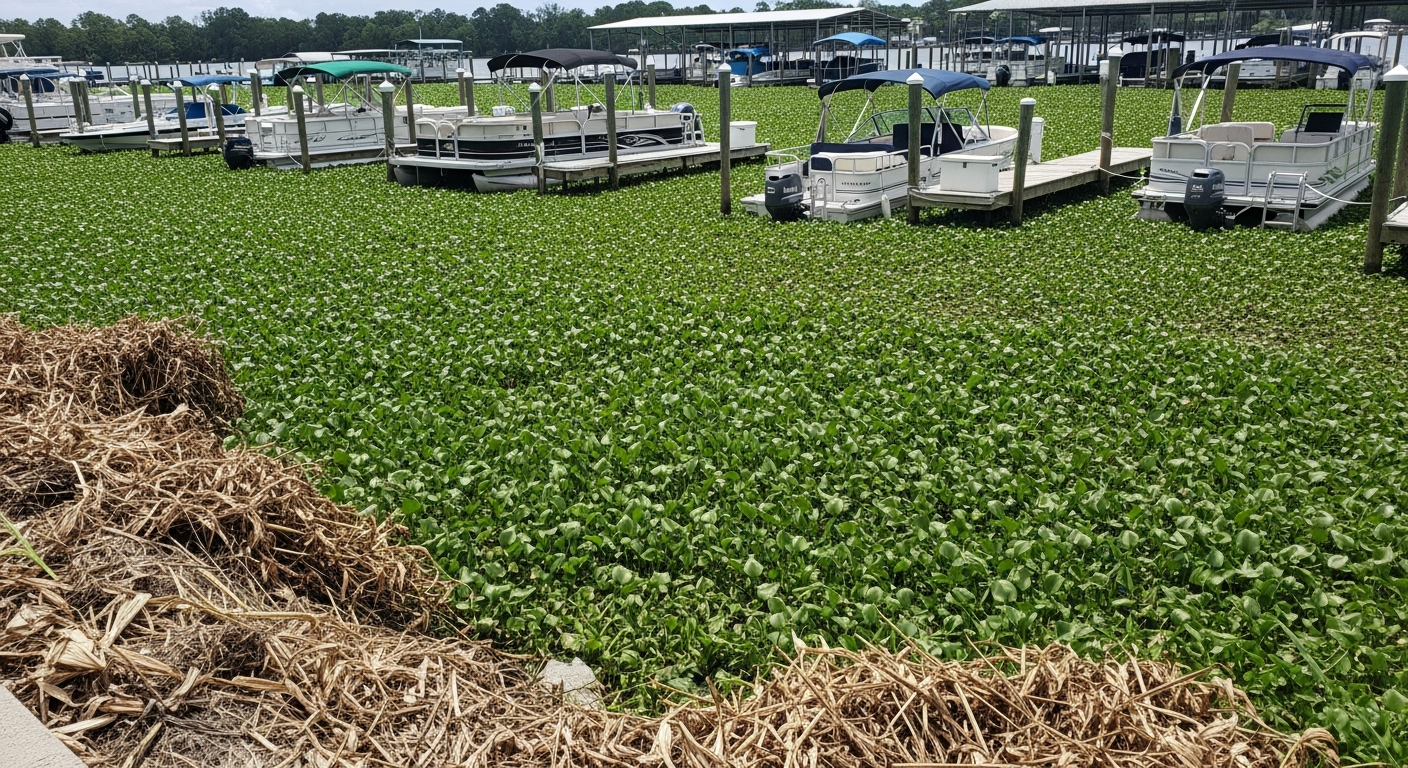
The Hidden Costs of Aquatic Weeds
While the ecological damage caused by Hydrilla verticillata is profound, it is often the economic damage that forces state legislatures and local municipalities to take aggressive action.
Hydrilla acts as an "economic sink," draining public funds for direct management while simultaneously depressing local tax bases by hurting tourism and real estate.
Macro-Economic Impacts
- Direct Treatment Budgets: States like Florida and Texas allocate massive sums of taxpayer money to herbicide programs. Florida's FWC routinely spends upwards of $20 million annually on hydrilla alone.
- Real Estate Devaluation: A pristine lake is a major real estate asset. When a lake becomes impassable due to hydrilla, waterfront property values can drop by 10% to 20%. This, in turn, lowers the property tax revenue collected by the county.
- Infrastructure Threats: Hydrilla fragments routinely clog intake pipes for municipal drinking water plants, agricultural irrigation systems, and hydroelectric dams. Clearing these intakes requires emergency mechanical intervention and risks expensive equipment failure.
The Impact on the Tourism and Recreation Sector
In rural areas surrounding large reservoirs (like Lake Seminole or Lake Guntersville), the local economy is often inextricably linked to the lake.
When hydrilla mats become too dense to navigate, recreational boating and swimming stop. More critically for these regions, major bass fishing tournaments are canceled or relocated.
The loss of a single major national fishing tournament can cost a small community millions of dollars in lost hotel bookings, restaurant sales, gas purchases, and retail spending. This secondary economic impact often dwarfs the direct cost of the herbicide treatments.
Explore Related Topics
References
Information presented on this page is supported by peer-reviewed research, federal agencies, and state resource management programs.
- U.S. Geological Survey (USGS) – Nonindigenous Aquatic Species Databasehttps://nas.er.usgs.gov
- U.S. Army Corps of Engineers – Aquatic Plant Control Research Programhttps://www.erdc.usace.army.mil
- NOAA Aquatic Invasive Species Programhttps://www.noaa.gov