Lake Damage Caused by Hydrilla Infestations
Explore the physical and ecological lake damage caused by hydrilla, including stagnation, sedimentation, infrastructure clogs, and lost recreational utility.
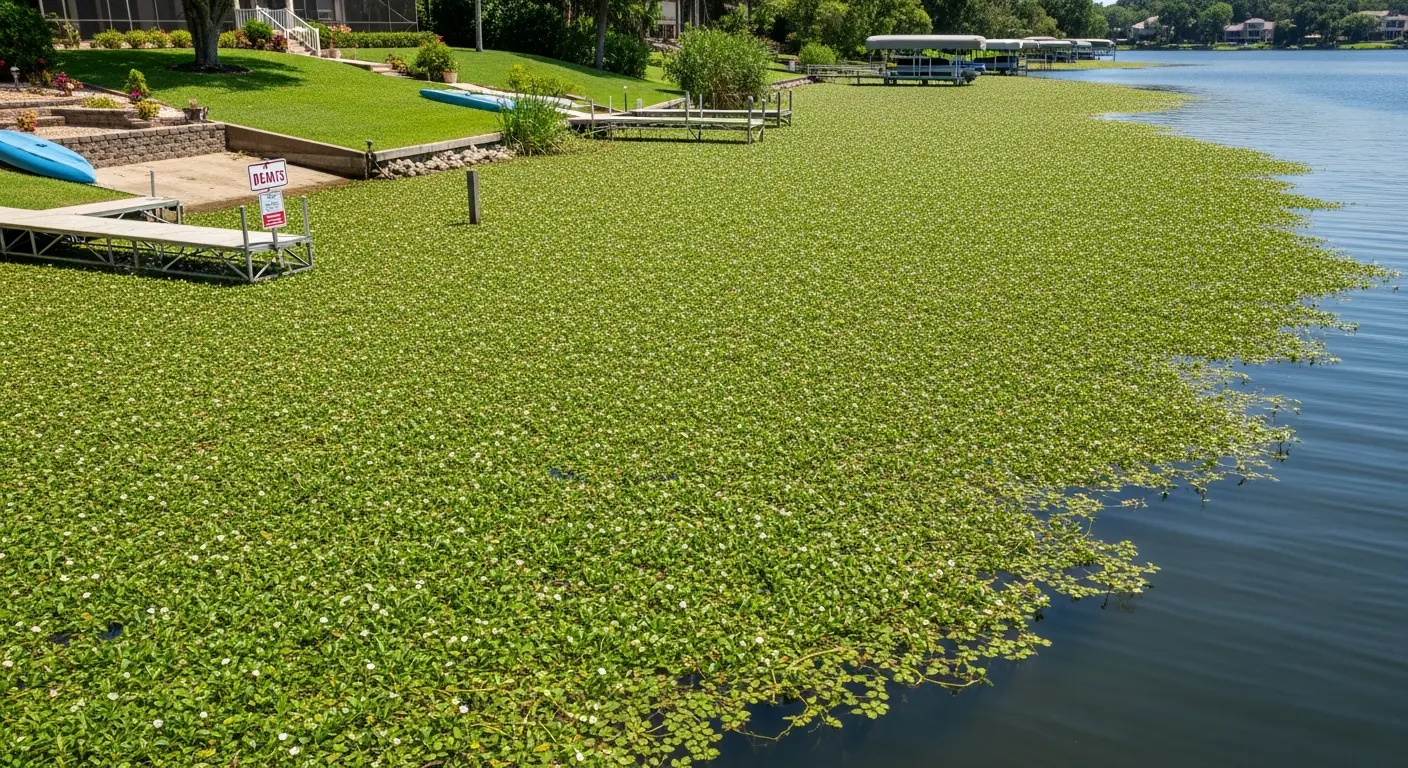
The Physical Transformation of a Lake
When Hydrilla verticillata invades a waterbody, it doesn't just quietly coexist with native species. It actively engineers the environment to suit its own aggressive growth patterns, causing severe physical and ecological damage to the lake itself.
By growing rapidly to the surface and branching out into dense, tangled mats, hydrilla fundamentally changes the hydrology, chemistry, and usability of the water.
Stagnation and Sedimentation
The physical bulk of a severe hydrilla infestation impedes the natural flow of water, especially in shallow coves and river-run reservoirs.
- Flow Restriction: Dense mats slow down water currents. This allows suspended sediments and pollutants, which would normally flush through the system, to drop out and accumulate on the lake bottom.
- Accelerated Aging: Hydrilla generates tons of biomass per acre every year. When this material dies and sinks in the winter, it creates a thick layer of organic muck, accelerating the lake's natural "filling in" process (eutrophication).
- Mosquito Breeding: The stagnant, still water trapped within the surface mats provides a perfect, predator-free breeding ground for mosquitoes.
Loss of Recreational Utility
For homeowners and tourists, the most immediate damage is the loss of lake access.
Hydrilla stems are remarkably tough. A thick canopy will stall jet skis, entangle boat propellers, clog water intakes, and make swimming dangerous or impossible due to the risk of entanglement. A lake choked with hydrilla ceases to function as a recreational asset, which directly drives the economic damage associated with the weed.
Explore Related Topics
References
Information presented on this page is supported by peer-reviewed research, federal agencies, and state resource management programs.
- U.S. Geological Survey (USGS) – Nonindigenous Aquatic Species Databasehttps://nas.er.usgs.gov
- U.S. Army Corps of Engineers – Aquatic Plant Control Research Programhttps://www.erdc.usace.army.mil
- NOAA Aquatic Invasive Species Programhttps://www.noaa.gov