Hydrilla Spread Timeline in North America
Trace the history of the hydrilla invasion in the US, from its introduction via the aquarium trade in the 1950s to its nationwide spread today.
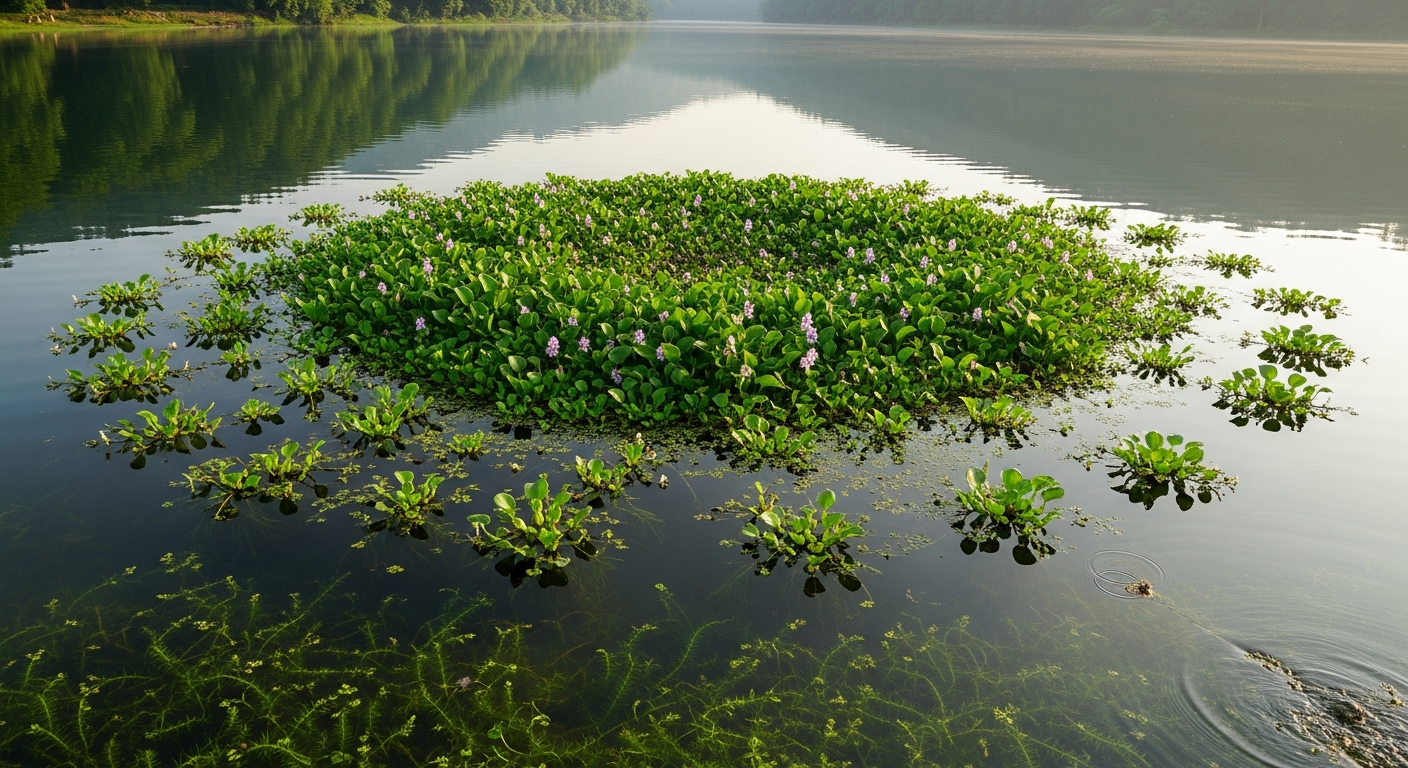
The Origins of the Invasion
The story of Hydrilla verticillata in North America is a classic example of an invasive species introduced through human commerce. Native to Asia, Africa, and Australia, hydrilla was prized for its hardy nature and attractive whorled leaves, making it a popular aquarium plant.
Historical Spread Timeline
- 1950s: The Introduction (Florida)The dioecious strain of hydrilla is imported for the aquarium trade. Dealers near Tampa and Miami either accidentally or intentionally release the plant into local canals and waterways, believing it would be harmless or even beneficial.
- 1960s - 1970s: The Southern ExpansionHydrilla spreads rapidly across Florida's interconnected lakes and rivers via boat trailers (fragmentation). By the end of the 1970s, it begins crossing state lines into Georgia and Texas.
- 1980s: The Monoecious Strain AppearsA distinctly different biotype—the cold-tolerant monoecious strain—is discovered in the Potomac River near Washington D.C. This changes the trajectory of the invasion, proving that hydrilla can survive harsh northern winters.
- 1990s - 2000s: The National ThreatHydrilla pushes westward into California and Washington state, and northward into the Carolinas and New England. Florida's infestation peaks at nearly 100,000 acres, prompting massive state-funded herbicide programs.
- Present DayHydrilla is now confirmed in at least 33 states. State agencies and the Army Corps of Engineers continue to fight a multi-million dollar annual battle to contain the spread, focusing heavily on boat inspection programs ("Clean, Drain, Dry") to prevent fragments from reaching unaffected lakes.
How Did It Spread So Fast?
The rapid spread of hydrilla is primarily due to human activity and the plant's unique reproductive biology.
A tiny fragment of the stem, clinging to a boat trailer or trapped in a livewell, can survive out of water for days. When the boater launches in a new lake, the fragment floats away, sinks, grows new roots, and establishes a brand new colony. This overland, human-assisted jump is why hydrilla appears in isolated lakes hundreds of miles from the nearest known infestation.
Explore Related Topics
References
Information presented on this page is supported by peer-reviewed research, federal agencies, and state resource management programs.
- U.S. Geological Survey (USGS) – Nonindigenous Aquatic Species Databasehttps://nas.er.usgs.gov
- U.S. Army Corps of Engineers – Aquatic Plant Control Research Programhttps://www.erdc.usace.army.mil
- NOAA Aquatic Invasive Species Programhttps://www.noaa.gov