Hydrilla Ecological & Economic Impact
Comprehensive overview of the ecological disruption and economic consequences associated with Hydrilla verticillata infestations in freshwater ecosystems.
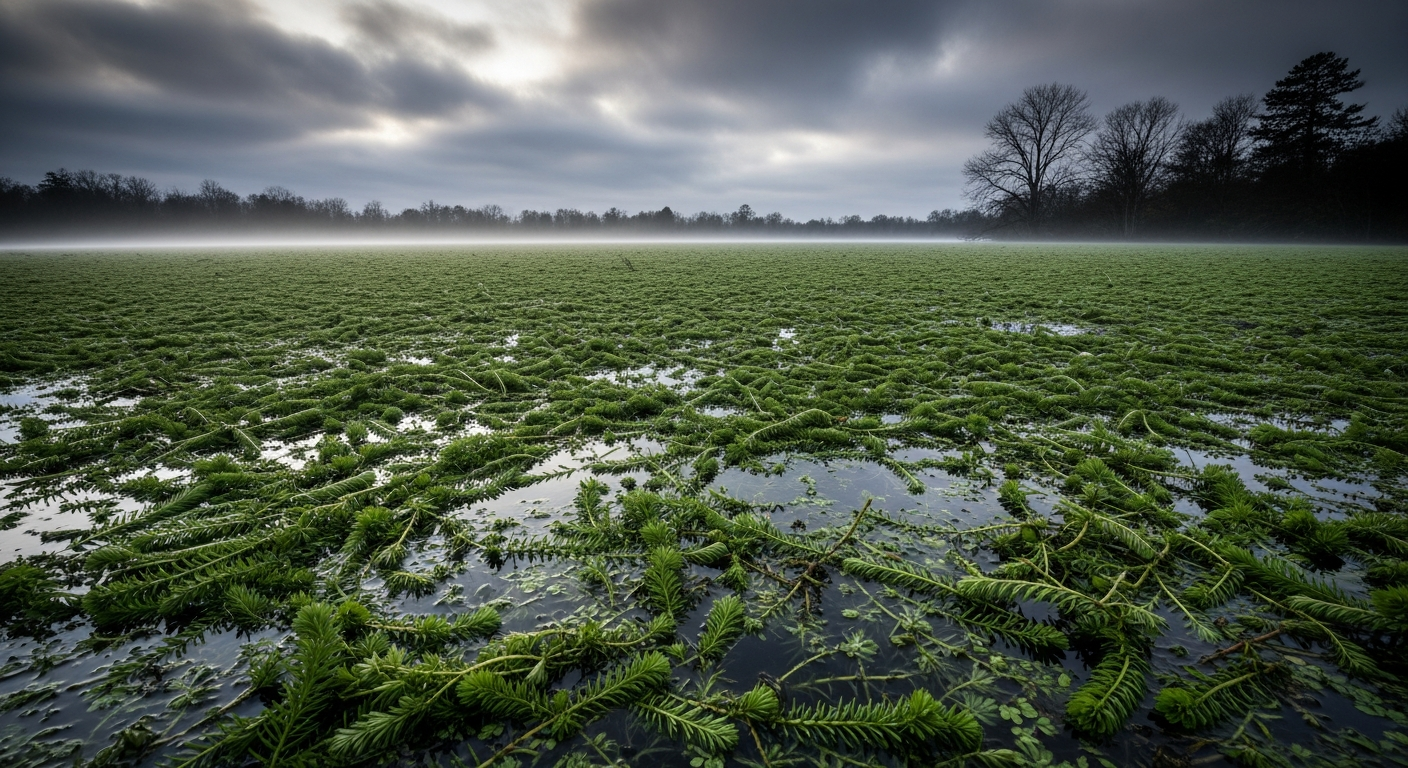
In This Section
Ecological Impact
Ecosystem-level changes including vegetation displacement, oxygen dynamics, and trophic shifts.
Fish Populations
Influence on habitat complexity, predator-prey dynamics, and fisheries structure.
Economic Impact
Management expenditures, recreational losses, and infrastructure costs.
Overview of Impact Pathways
Hydrilla verticillata alters freshwater ecosystems through rapid vegetative expansion, canopy formation, and persistent sediment tuber production. These biological characteristics drive both ecological and economic consequences.
Impacts vary by geographic region, infestation density, waterbody type, and management intensity.
A full biological overview of the species is provided in the Hydrilla master guide.
Ecological Consequences
Dense Hydrilla infestations may displace native submerged aquatic vegetation, modify water chemistry, and alter habitat structure for fish and invertebrates.
Changes in dissolved oxygen dynamics and nutrient cycling can further influence aquatic community composition.
Detailed ecological mechanisms are examined in the ecological impact section.
Fisheries and Wildlife Effects
Moderate vegetation may provide nursery habitat for juvenile fish, while excessive growth can reduce open-water access and shift predator-prey dynamics.
Wildlife interactions may include altered foraging patterns and, in rare cases, association with toxin-producing epiphytic organisms.
Fisheries implications are discussed in detail in the fish populations section.
Economic Implications
Hydrilla infestations generate recurring management costs, reduce recreational accessibility, and may impact municipal water infrastructure.
Because infestations often require ongoing suppression rather than one-time removal, long-term fiscal planning is typically required.
Financial consequences are analyzed in the economic impact section.
Geographic Variation in Impact
The magnitude and type of impact vary significantly across regions. Climate, nutrient status, reservoir design, and hydrology influence how Hydrilla affects local ecosystems.
Regional infestation patterns are documented in the Hydrilla distribution section.
Relationship Between Impact and Management
Understanding ecological and economic impacts informs management strategy selection. Control programs are typically designed to reduce harmful consequences while preserving ecological function.
Available management approaches are outlined in the Hydrilla control and management section.
References
Information presented on this page is supported by peer-reviewed research, federal agencies, and state resource management programs.
- U.S. Geological Survey (USGS) – Nonindigenous Aquatic Species Databasehttps://nas.er.usgs.gov
- U.S. Army Corps of Engineers – Aquatic Plant Control Research Programhttps://www.erdc.usace.army.mil