Economic Impact of Hydrilla
Analysis of the economic costs associated with Hydrilla verticillata infestations, including management expenditures, recreational losses, infrastructure impacts, and long-term fiscal considerations.
Overview of the Economic Burden
Hydrilla verticillata imposes massive economic costs on states, municipalities, lake associations, and private stakeholders. Financial impacts stem from direct management expenditures, reduced recreational access, infrastructure interference, and depreciated property values.
Because Hydrilla infestations require recurring, multi-year treatment plans due to their persistent tuber banks, these are rarely one-time costs. They become permanent line items in municipal and HOA budgets.
Direct Management Expenditures
Aquatic vegetation management programs targeting Hydrilla are notoriously expensive. Programs involve purchasing specialized aquatic herbicides, contracting licensed applicators, and deploying heavy mechanical harvesting equipment.
For a detailed breakdown of what property owners and lake managers actually pay to remove the weed, refer to our comprehensive guide on hydrilla treatment costs per acre.
Recreational and Tourism Losses
Dense surface mats obstruct boating, swimming, and fishing activities. In states where freshwater recreation is a major economic driver, hydrilla can devastate local economies.
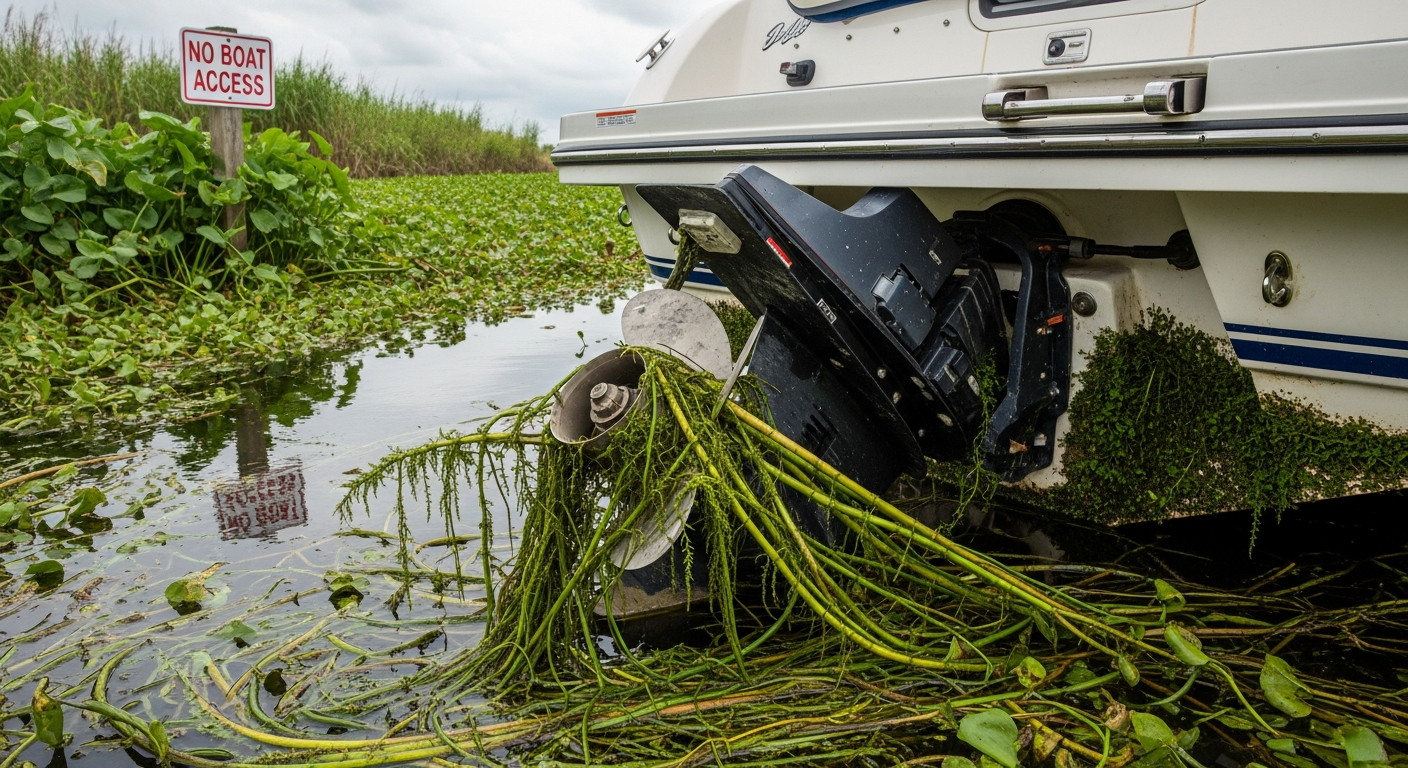
- Marinas and Boat Rentals: Businesses lose revenue when waterways become impassable. Boat motors regularly overheat and suffer damage when water intakes are clogged with weed fragments.
- Fishing Tournaments: While bass fishermen may appreciate moderate hydrilla, severe infestations make lakes unfishable, leading to canceled tournaments and lost revenue for local hotels and restaurants.
Municipal and Infrastructure Impacts
Beyond recreation, hydrilla poses a serious threat to critical water infrastructure. Dense vegetation mats floating down rivers or circulating in reservoirs can physically block:
- Water Intake Structures: Municipal drinking water facilities and agricultural irrigation pumps can be clogged, requiring emergency mechanical clearing.
- Hydroelectric Facilities: Hydrilla can clog the trash racks of hydroelectric dams, reducing power generation efficiency and risking equipment damage.
- Flood Control: By impeding water flow in drainage canals and rivers, heavy hydrilla infestations increase the risk of upstream flooding during heavy rainfall events.
References
Information presented on this page is supported by peer-reviewed research, federal agencies, and state resource management programs.
- U.S. Geological Survey (USGS) – Nonindigenous Aquatic Species Databasehttps://nas.er.usgs.gov
- U.S. Army Corps of Engineers – Aquatic Plant Control Research Programhttps://www.erdc.usace.army.mil
- NOAA Aquatic Invasive Species Programhttps://www.noaa.gov