Canal Removal of Hydrilla
Examine the unique challenges of removing hydrilla from flowing irrigation and drainage canals, focusing on specialized mechanical equipment and fragmentation risks.
The Threat to Flowing Waterways
Hydrilla verticillata presents a severe infrastructure threat when it invades linear, flowing waterways such as agricultural irrigation networks, municipal drainage canals, and flood-control channels.
The dense biomass of a hydrilla infestation drastically increases hydraulic friction, slowing water flow to a crawl. This can devastate agricultural yields by starving crops of water, or cause catastrophic flooding during storm events when drainage canals fail to move water away from residential areas.
Land-Based Mechanical Extraction
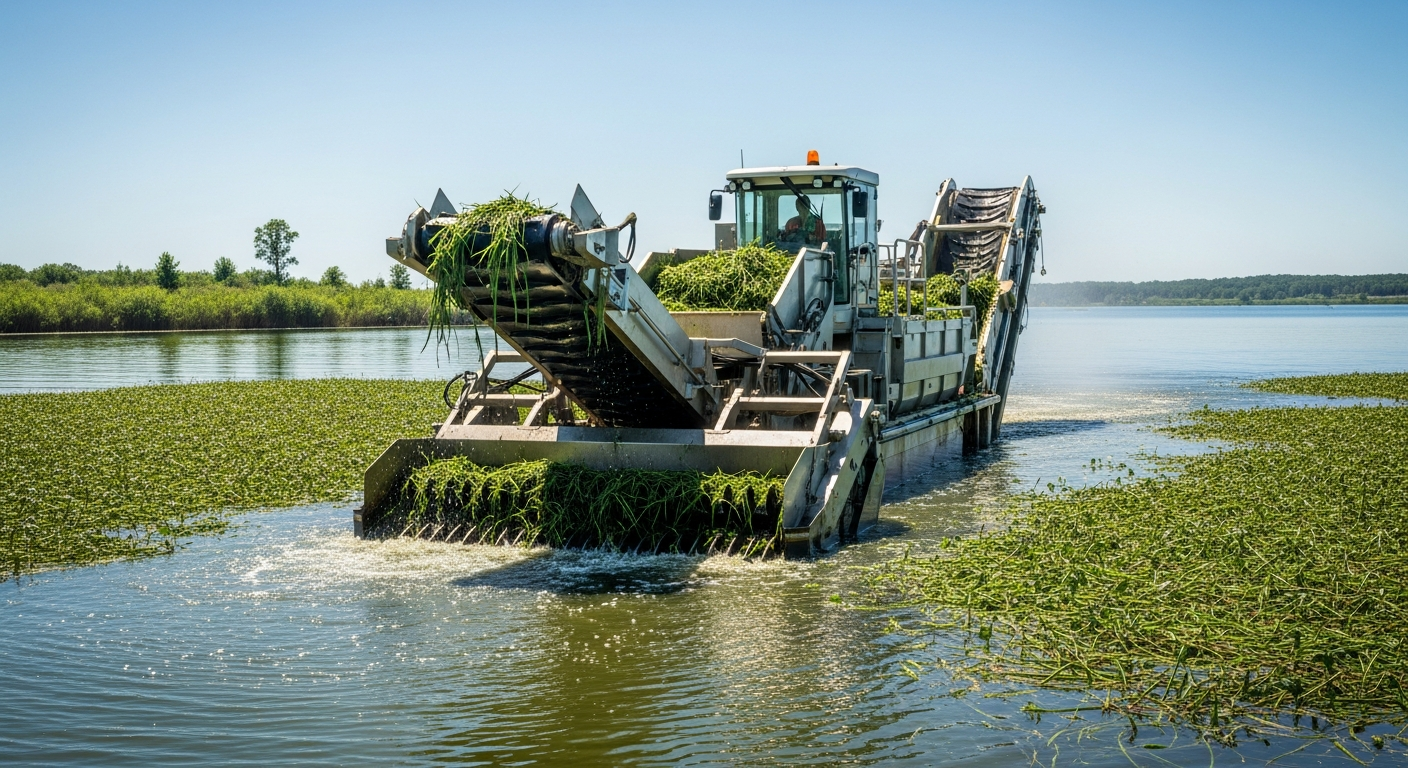
Because canals are often too narrow or shallow for large aquatic harvester boats, mechanical removal relies heavily on land-based heavy machinery operating from the canal banks.
- Long-Reach Excavators: Tracked excavators fitted with specialized, wide, slotted "weed buckets" reach into the canal, scrape the bottom, and pull massive amounts of hydrilla onto the bank.
- Draglines: For wider canals, draglines can be used to drag a heavy rake across the channel bottom.
- Immediate Relief: This method immediately restores hydraulic flow to the canal, which is critical during flood emergencies.
The Extreme Fragmentation Risk in Flowing Water
Mechanical removal in canals carries the absolute highest risk of spreading hydrilla.
Because the water is flowing, every single stem fragment created by the excavator buckets is carried downstream. If the canal empties into a pristine lake, a river, or an estuary, the mechanical clearing operation will directly seed a massive new infestation.
To mitigate this, operators must install heavy-duty fragment barriers (screens or nets) downstream of the work area to catch the debris, which must then be manually removed.
Explore Related Topics
Professional Hydrilla Removal Services
Dealing with a severe hydrilla infestation? DK Aquatic provides commercial-grade mechanical harvesting, pond removal, and comprehensive lake management services across the United States, specializing in California and high-priority zones.
Contact DK Aquatic for a ConsultationReferences
Information presented on this page is supported by peer-reviewed research, federal agencies, and state resource management programs.
- U.S. Geological Survey (USGS) – Nonindigenous Aquatic Species Databasehttps://nas.er.usgs.gov
- U.S. Army Corps of Engineers – Aquatic Plant Control Research Programhttps://www.erdc.usace.army.mil
- NOAA Aquatic Invasive Species Programhttps://www.noaa.gov