Mechanical Removal of Hydrilla
Overview of physical and mechanical techniques used to manage Hydrilla verticillata infestations, including aquatic harvesting, dredging, and fragment containment.
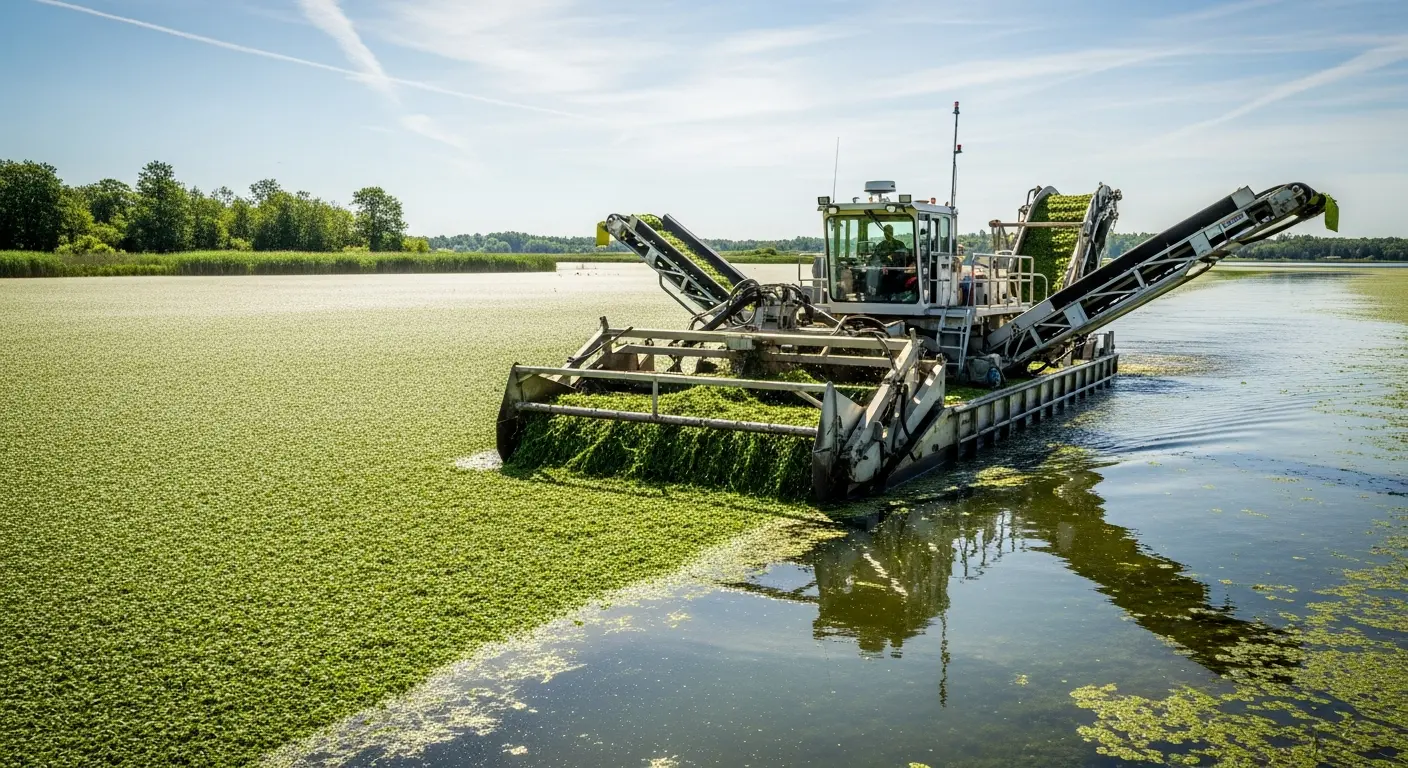
Overview of Mechanical Hydrilla Control
Mechanical removal refers to the physical cutting, pulling, or harvesting of Hydrilla verticillata. Unlike systemic herbicides that take weeks to show results, mechanical harvesting provides immediate visual improvement and instantly restores navigational access to choked waterways.
While highly effective for short-term clearing, mechanical removal is essentially "mowing the lawn." The roots and underground tubers remain untouched, guaranteeing that the hydrilla will grow back.
Aquatic Plant Harvesters
The most common mechanical method is the use of large, specialized boats called aquatic plant harvesters. These vessels are equipped with a front-mounted cutting bar that lowers into the water (typically down to 5 or 6 feet deep) and a conveyor belt that scoops the cut vegetation onto the deck.
- Benefits: Harvesters immediately open boat lanes and swimming areas. Furthermore, by physically removing the plant mass from the lake, it prevents the hydrilla from dying and rotting in the water, which protects dissolved oxygen levels and removes the phosphorus bound inside the plant tissue.
- Drawbacks: Harvesters are slow and expensive to operate. The cut biomass is incredibly heavy (mostly water) and must be offloaded onshore and trucked to a disposal site.
The Fragmentation Danger
The single largest risk associated with mechanical removal of hydrilla is fragmentation. Hydrilla evolved to spread via broken stem fragments.
When a harvester cuts through a dense hydrilla mat, it inevitably misses pieces. These small fragments float away on the wind and current. If a single fragment containing a leaf node lands in an uninfested part of the lake, it will sink, root, and start a new colony.
Because of this, many state agencies prohibit the mechanical harvesting of hydrilla unless the operators deploy strict floating containment booms to catch all drifting fragments.
Dredging for Tuber Removal
Because hydrilla relies on subterranean tubers to survive the winter and survive herbicide treatments, some lake managers look to dredging as a permanent solution.
Dredging uses heavy machinery to physically scoop out the top several feet of benthic sediment (mud) from the lake bottom, theoretically removing the entire hydrilla tuber bank.
- While technically effective, dredging is prohibitively expensive (often costing millions of dollars for large lakes).
- It is highly disruptive to the benthic ecosystem, destroying habitat for macroinvertebrates and fish.
- If even a small pocket of tubers is missed during dredging, the hydrilla will eventually return.
Integrating Mechanical Removal
In a comprehensive Integrated Pest Management (IPM) plan, mechanical removal is rarely used in isolation.
A common strategy is to use harvesters to cut paths through impenetrable hydrilla mats so that spray boats can access the coves to apply systemic herbicides. Once the heavy biomass is cleared, grass carp can be stocked to maintain the cleared areas.
Professional Hydrilla Removal Services
Dealing with a severe hydrilla infestation? DK Aquatic provides commercial-grade mechanical harvesting, pond removal, and comprehensive lake management services across the United States, specializing in California and high-priority zones.
Contact DK Aquatic for a ConsultationReferences
Information presented on this page is supported by peer-reviewed research, federal agencies, and state resource management programs.
- U.S. Geological Survey (USGS) – Nonindigenous Aquatic Species Databasehttps://nas.er.usgs.gov
- U.S. Army Corps of Engineers – Aquatic Plant Control Research Programhttps://www.erdc.usace.army.mil
- NOAA Aquatic Invasive Species Programhttps://www.noaa.gov