Hydrilla Removal in Retention Ponds (HOAs & Municipal)
Explore strategies for managing hydrilla in stormwater retention ponds, addressing HOA concerns, runoff regulations, and small-scale mechanical options.
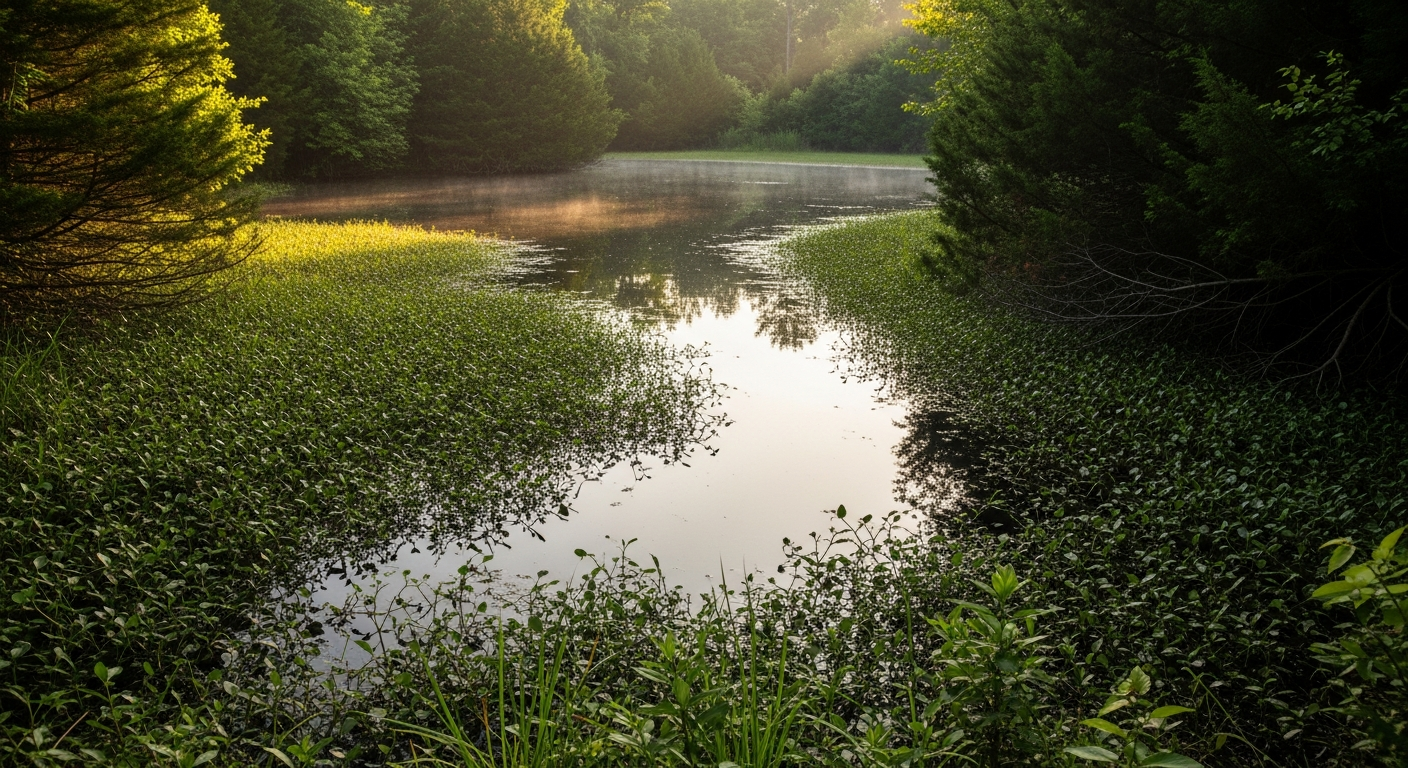
The Stormwater Problem
Stormwater retention ponds are engineered structures designed to capture rain runoff, prevent local flooding, and filter pollutants before water enters the natural aquifer. Unfortunately, these exact conditions make them perfect incubators for Hydrilla verticillata.
These ponds receive constant influxes of nitrogen and phosphorus from fertilized neighborhood lawns. When a bird or a piece of landscaping equipment introduces a hydrilla fragment to this nutrient-dense, shallow water, the weed rapidly chokes the entire pond.
The Risk of Inaction for HOAs
For Homeowners Associations, ignoring a hydrilla infestation is not an option.
- Loss of Capacity: Hydrilla biomass physically displaces water. A choked pond cannot hold its designed volume of stormwater, leading to street and property flooding during heavy rains.
- Fines and Liability: Municipalities regularly inspect retention ponds. If an HOA fails to maintain the pond's functional capacity, they can face severe fines from local water management districts.
- Property Values: A pond covered in a thick, scummy mat of hydrilla is an eyesore that generates foul odors, negatively impacting the property values of the surrounding homes.
Mechanical Solutions for Retention Ponds
Because retention ponds often drain into larger natural water bodies, the use of certain systemic herbicides might be heavily restricted. In these cases, mechanical removal is necessary.
Small, highly maneuverable harvesting boats (often called "weed weeders" or "truxors") are frequently used. These machines can navigate tight corners and shallow shorelines, scooping the hydrilla out and depositing it onto the bank for removal.
However, because retention ponds are continuously fed with nutrients, mechanical harvesting is a temporary fix. It is highly recommended that HOAs contract with professional aquatic management services to establish an ongoing maintenance plan.
Explore Related Topics
Professional Hydrilla Removal Services
Dealing with a severe hydrilla infestation? DK Aquatic provides commercial-grade mechanical harvesting, pond removal, and comprehensive lake management services across the United States, specializing in California and high-priority zones.
Contact DK Aquatic for a ConsultationReferences
Information presented on this page is supported by peer-reviewed research, federal agencies, and state resource management programs.
- U.S. Geological Survey (USGS) – Nonindigenous Aquatic Species Databasehttps://nas.er.usgs.gov
- U.S. Army Corps of Engineers – Aquatic Plant Control Research Programhttps://www.erdc.usace.army.mil
- NOAA Aquatic Invasive Species Programhttps://www.noaa.gov