Hydrilla in Georgia: The River Impoundment Challenge
Examine how hydrilla has choked major river impoundments in Georgia, threatening the state's massive recreational fishing economy.
The Northern March
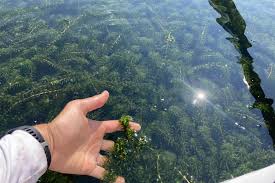
As the Hydrilla verticillata invasion exploded out of Florida in the 1970s and 80s, Georgia was squarely in the crosshairs. The state's massive river-run impoundments (dammed rivers) provided the perfect shallow, nutrient-rich littoral zones for the dioecious biotype to colonize.
Today, hydrilla threatens the state's highly lucrative recreational bass fishing industry and poses a severe threat to hydroelectric power generation on major rivers like the Chattahoochee and the Flint.
Lake Seminole: A Case Study
Lake Seminole, situated on the border of Georgia and Florida, is one of the most heavily managed lakes in the country. The shallow reservoir is plagued by a nearly impenetrable mat of hydrilla.
- The AVM Threat: Lake Seminole, along with Clarks Hill Lake, has been a major focal point for research into Avian Vacuolar Myelinopathy (AVM). The cyanobacteria that causes the deadly neurological disease thrives on hydrilla leaves in these reservoirs, leading to the death of bald eagles and American coots.
- Management: The US Army Corps of Engineers and state agencies wage an annual, multi-million dollar war on the lake just to keep boat ramps open and maintain flow to the Jim Woodruff Lock and Dam.
Interstate Coordination
Because Georgia's major reservoirs often form the border with neighboring states (Lake Seminole with FL/AL, Lake Hartwell with SC, Lake Eufaula with AL), management requires intense interstate coordination and funding.
Georgia's Department of Natural Resources (DNR) focuses heavily on public education, utilizing "Clean, Drain, Dry" campaigns at boat ramps to slow the secondary spread of hydrilla fragments to uninfected northern lakes like Lake Lanier.
Explore Related Topics
References
Information presented on this page is supported by peer-reviewed research, federal agencies, and state resource management programs.
- U.S. Geological Survey (USGS) – Nonindigenous Aquatic Species Databasehttps://nas.er.usgs.gov
- U.S. Army Corps of Engineers – Aquatic Plant Control Research Programhttps://www.erdc.usace.army.mil
- NOAA Aquatic Invasive Species Programhttps://www.noaa.gov