Hydrilla in Florida: The Epicenter of the Invasion
Explore the history, economic impact, and massive ongoing management efforts of hydrilla in Florida's lakes, rivers, and springs.
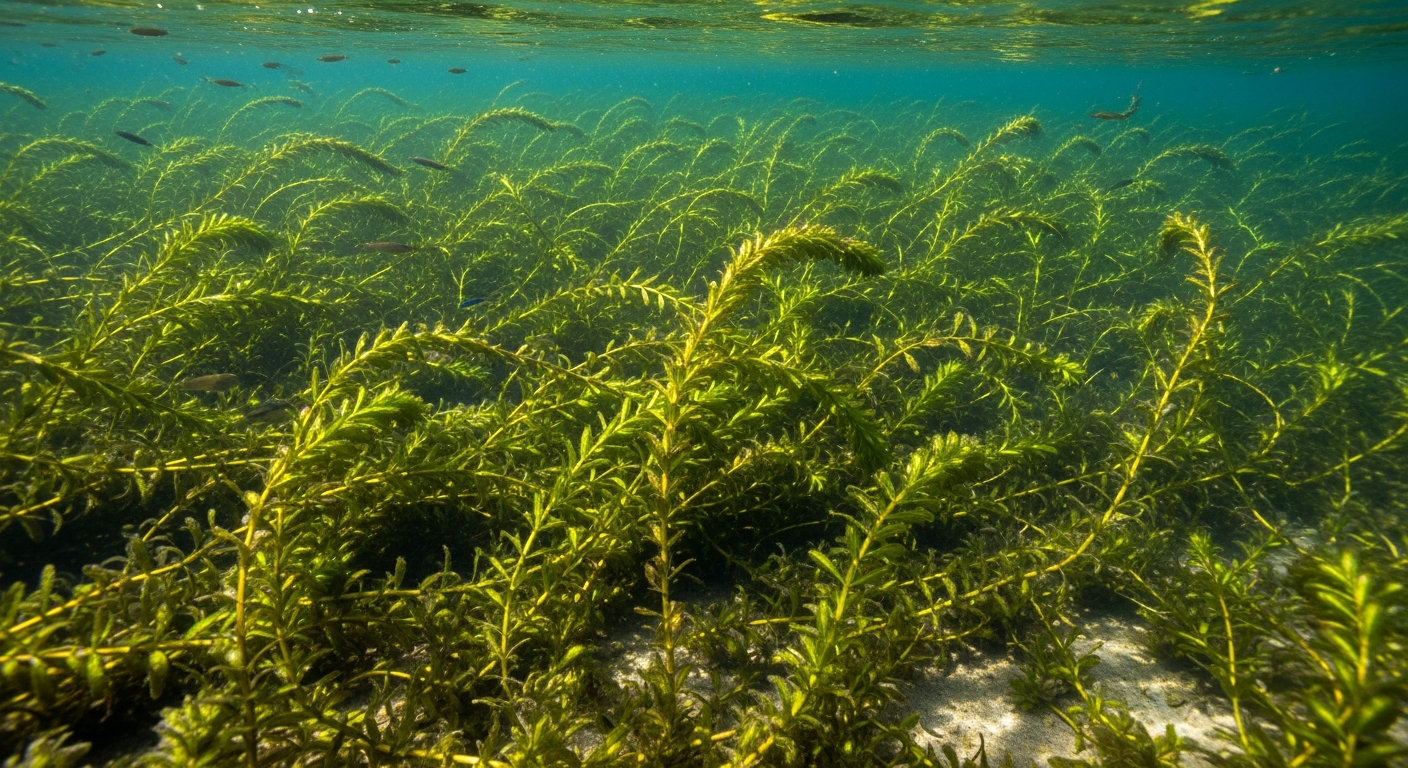
Ground Zero for the Invasion
Florida is the undisputed epicenter of the Hydrilla verticillata invasion in the United States. Introduced in the 1950s, the dioecious biotype found the perfect incubator in Florida's shallow, nutrient-rich, and warm waterbodies.
Because the water rarely freezes, hydrilla in Florida can grow year-round, rapidly forming impenetrable surface canopies that disrupt the state's fragile aquatic ecosystems and its multi-billion dollar recreational fishing and boating industries.
Major Affected Waterbodies
Nearly every major river basin and lake chain in Florida has battled hydrilla at some point. Some of the most high-profile ongoing management areas include:
- Lake Okeechobee: The "Liquid Heart of Florida" requires constant monitoring to ensure hydrilla mats do not block critical flood control structures or navigation channels.
- The Kissimmee Chain of Lakes: A world-famous bass fishing destination where the FWC carefully balances hydrilla control with maintaining fish habitat (often leaving up to 30% coverage).
- The Harris Chain of Lakes: Historic battles with massive hydrilla blooms have led to intensive, multi-million dollar whole-lake fluridone treatments.
- Crystal River / Kings Bay: Hydrilla choked out native eelgrass in these famous manatee habitats, requiring a massive, multi-year mechanical and replanting effort by the community.
Maintenance Control Strategy
Florida long ago realized that total eradication of hydrilla is impossible due to the massive subterranean tuber bank. Instead, the state relies on a strategy called Maintenance Control.
The goal is to treat hydrilla when it is at low levels, rather than waiting for an emergency. This uses fewer herbicides, costs less money, and deposits less dead plant material into the sediment. The FWC coordinates this massive effort across the state, utilizing systemic herbicides, contact herbicides, and careful stocking of triploid grass carp.
Explore Related Topics
References
Information presented on this page is supported by peer-reviewed research, federal agencies, and state resource management programs.
- U.S. Geological Survey (USGS) – Nonindigenous Aquatic Species Databasehttps://nas.er.usgs.gov
- U.S. Army Corps of Engineers – Aquatic Plant Control Research Programhttps://www.erdc.usace.army.mil
- NOAA Aquatic Invasive Species Programhttps://www.noaa.gov