Hydrilla vs Native Aquatic Plants: Ecological Competition
Explore the ecological warfare between hydrilla and native aquatic plants. Learn exactly how hydrilla outcompetes, shades out, and displaces native species.
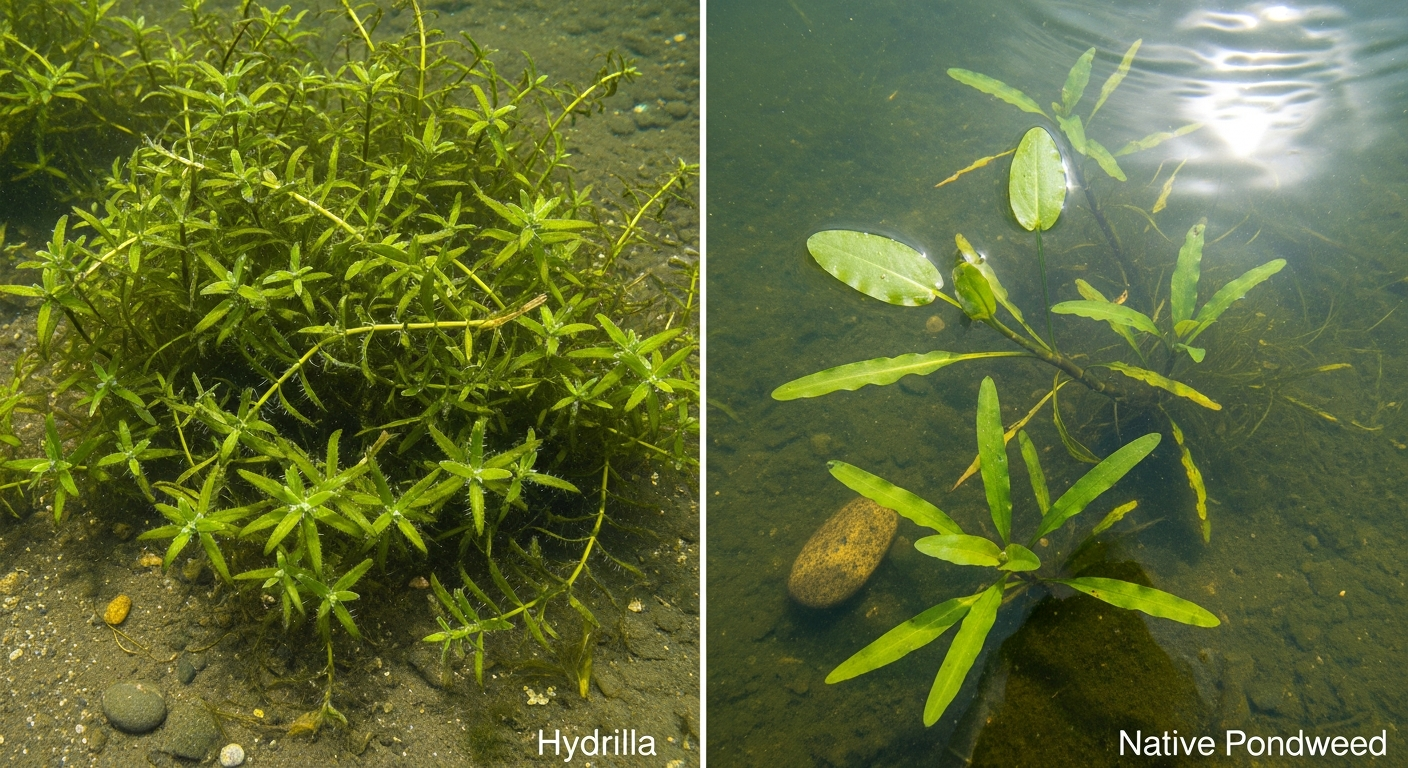
The Unfair Fight: Hydrilla vs Native Plants
When Hydrilla verticillata enters a healthy freshwater ecosystem, it does not peacefully coexist with the native flora. Instead, it initiates a ruthless ecological takeover. The competition between hydrilla and native aquatic plants is entirely one-sided, resulting in the rapid displacement of native species.
A healthy lake relies on a diverse array of native submerged plants (like pondweeds, wild celery, and native naiads) to support a balanced food web. When hydrilla takes over, that biodiversity plummets.
How Hydrilla Outcompetes Natives
Hydrilla possesses a "perfect storm" of biological advantages that make it nearly impossible for native plants to compete:
- The Canopy Effect: Unlike native plants that often stay submerged and dispersed, hydrilla races to the surface and branches out to form an impenetrable canopy. This blocks up to 95% of sunlight, starving the native plants below.
- Low-Light Dominance: Native plants typically need significant sunlight to survive. Hydrilla can thrive on just 1% of full sunlight, allowing it to start growing deeper and earlier in the year than natives.
- Aggressive Nutrient Uptake: Hydrilla is highly efficient at pulling phosphorus and nitrogen from both the water column and the benthic sediment, leaving fewer nutrients for competing plants.
- Chemical Warfare (Allelopathy): Some research suggests hydrilla may release specific biochemicals into the water that actively inhibit the growth of competing native plant species.
The Monoculture Disaster
When native plants die off, hydrilla fills the void, creating a "monoculture"—a vast underwater forest consisting of only one species.
This lack of biodiversity has devastating cascading effects up the food chain. Native insects and macroinvertebrates that rely on specific native plants for food and reproduction decline. Consequently, the native fish, turtles, and waterfowl that feed on those insects also suffer.
While a small amount of hydrilla might temporarily benefit small baitfish by providing hiding spots, dense monocultures impede the movement of large predatory fish (like largemouth bass), ultimately leading to stunted, unhealthy fish populations.
Restoring the Balance
The ultimate goal of hydrilla management isn't just to kill weeds—it's to restore the ecological balance. This requires highly selective management strategies.
Lake managers often use selective systemic herbicides (like Fluridone or Endothall applied at specific rates) that are highly lethal to hydrilla but relatively safe for native plants like pondweed or eelgrass. By carefully knocking back the hydrilla canopy, managers can allow the "seed bank" of native plants buried in the sediment to receive sunlight and naturally revegetate the lake.
Explore Related Topics
References
Information presented on this page is supported by peer-reviewed research, federal agencies, and state resource management programs.
- U.S. Geological Survey (USGS) – Nonindigenous Aquatic Species Databasehttps://nas.er.usgs.gov
- U.S. Army Corps of Engineers – Aquatic Plant Control Research Programhttps://www.erdc.usace.army.mil
- NOAA Aquatic Invasive Species Programhttps://www.noaa.gov