Hydrilla Treatment Cost Per Acre Analysis
A detailed breakdown of hydrilla treatment costs per acre, covering herbicides, mechanical harvesting, grass carp, and professional lake management fees.
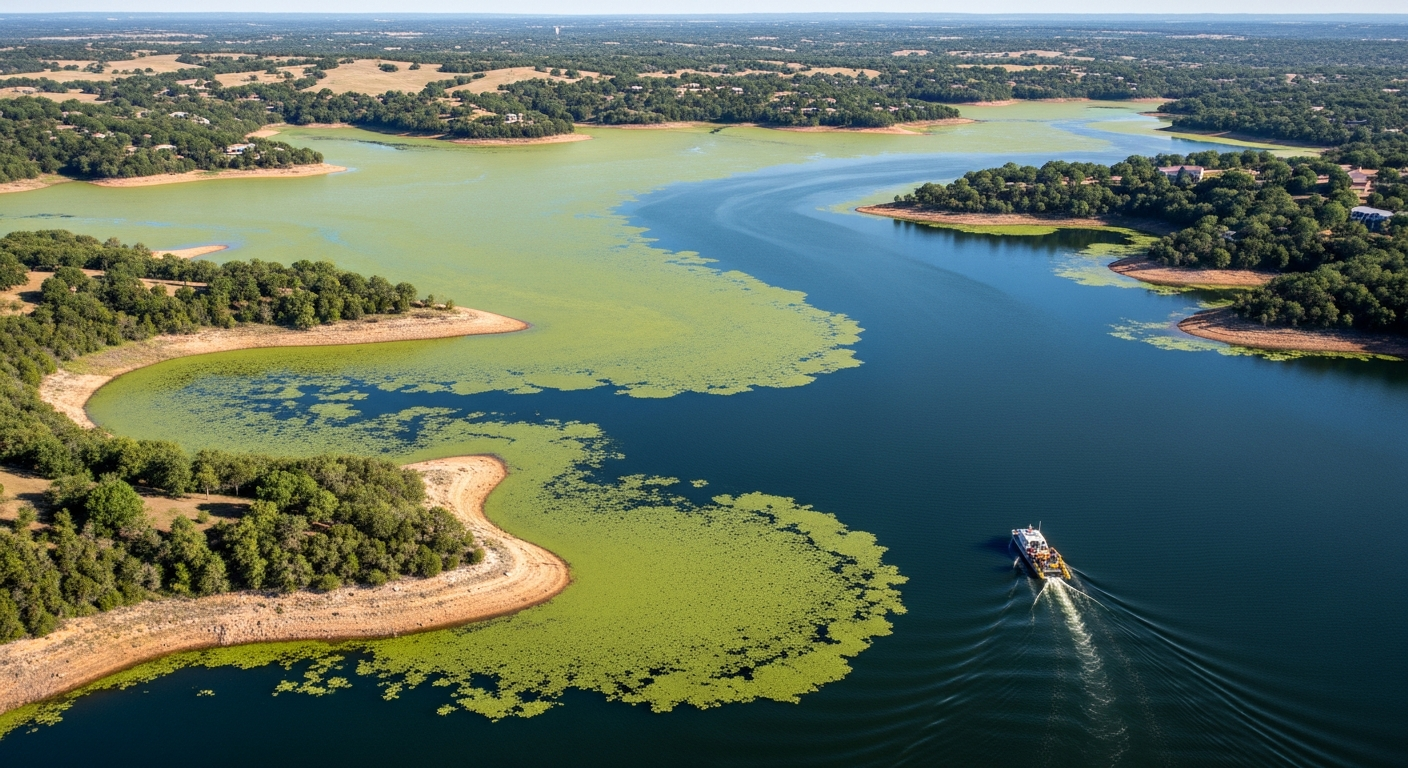
Analyzing the Cost Per Acre to Treat Hydrilla
When budgeting for hydrilla management on a lake, reservoir, or private pond, stakeholders must understand the cost per acre. Hydrilla is notoriously expensive to control, largely because of its rapid growth rate, its ability to survive in deep water, and the necessity of multi-year treatments.
It is important to note that treatment costs are almost always calculated by acre-foot rather than just surface acreage. Treating 10 acres of water that is 2 feet deep requires significantly less herbicide than treating 10 acres of water that is 15 feet deep.
Herbicide Treatment Costs
Chemical control is the most common approach. Costs vary widely based on whether the applicator uses a fast-acting contact herbicide or a slow-acting systemic herbicide.
- Contact Herbicides (Diquat, Endothall): Typically range from $300 to $600 per acre. These are cheaper upfront but only burn off the surface canopy. Because the roots survive, multiple treatments may be required in a single season, driving up the long-term cost.
- Systemic Herbicides (Fluridone, ProcellaCOR): Typically range from $800 to $1,500+ per acre. These chemicals are highly advanced and extremely expensive per gallon. However, they kill the entire plant down to the root, often requiring only one treatment per season.
- Application Fees: Professional lake management companies charge labor and equipment fees (airboats, specialized spray rigs) on top of the raw chemical costs.
Mechanical Harvesting Costs
Using aquatic plant harvesters to physically cut and remove the hydrilla biomass is highly effective for instantly clearing boat lanes, but it is incredibly labor-intensive.
Mechanical harvesting costs generally range from $800 to $2,500 per acre.
The high cost is due to the slow speed of the harvesters and the logistical nightmare of disposal. Hydrilla is 90% water; a single acre can yield 10 to 20 tons of wet plant material that must be offloaded from the harvester onto a dump truck and hauled to a composting or disposal site.
Biological Control (Grass Carp) Costs
For long-term, low-maintenance control, triploid grass carp offer the best return on investment.
Certified sterile grass carp typically cost between $10 and $20 per fish. Depending on the density of the hydrilla, biologists usually recommend stocking 5 to 15 fish per vegetated acre.
This translates to an initial cost of $50 to $300 per acre. Because the fish will graze for 4 to 5 years before needing to be restocked, the amortized cost per acre is extraordinarily low compared to annual herbicide treatments.
Explore Related Topics
References
Information presented on this page is supported by peer-reviewed research, federal agencies, and state resource management programs.
- U.S. Geological Survey (USGS) – Nonindigenous Aquatic Species Databasehttps://nas.er.usgs.gov
- U.S. Army Corps of Engineers – Aquatic Plant Control Research Programhttps://www.erdc.usace.army.mil
- NOAA Aquatic Invasive Species Programhttps://www.noaa.gov