Homemade Hydrilla Killer: Do DIY Treatments Work?
Scientific evaluation of homemade hydrilla killer methods, environmental risks, legal considerations, and safer alternatives for hydrilla control.
Do Homemade Hydrilla Killers Work?
Many property owners search for homemade hydrilla killer solutions to avoid the cost of professional treatment. However, hydrilla (Hydrilla verticillata) is a highly resilient aquatic invasive species that reproduces through underground tubers and fragmentation.
Most household or “DIY” remedies are ineffective against established infestations and may create environmental or legal risks.
Common DIY Methods and Their Limitations
Salt
While hydrilla does not tolerate high salinity, adding salt to freshwater systems can harm fish, amphibians, and native vegetation. It is not considered a safe or practical control method.
Bleach or Household Chemicals
Introducing chlorine-based products into natural waterbodies can damage aquatic ecosystems and may violate water quality regulations.
Copper Sulfate
Copper compounds are sometimes used in regulated aquatic management, but improper application can lead to toxicity and fish kills. Application typically requires permits and certified applicators.
Legal and Environmental Considerations
Hydrilla management is regulated in many states. Applying chemicals to ponds, lakes, or reservoirs without proper authorization may violate environmental protection laws.
Because hydrilla is often classified as a noxious or invasive species, state agencies frequently provide approved treatment guidelines.
Why Hydrilla Is Difficult to Eliminate
Hydrilla produces tubers that can remain viable in sediment for multiple years. Even if surface vegetation is removed, regrowth often occurs from underground structures.
Effective hydrilla control requires systemic treatment strategies that address both canopy growth and sediment tuber banks.
Safer and More Effective Alternatives
Instead of homemade solutions, consider approved hydrilla control strategies such as:
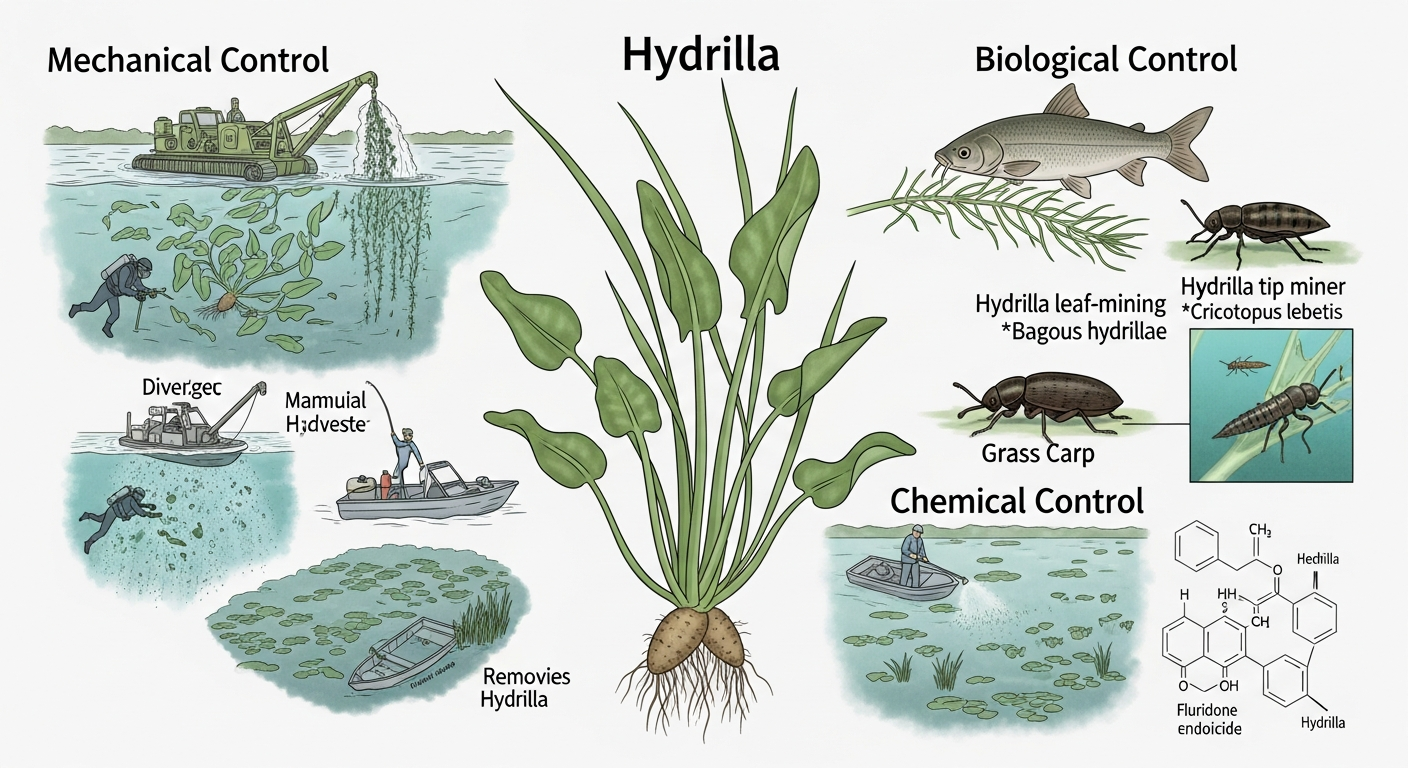
- Mechanical Removal: Use a lake rake or weed cutter to physically remove vegetation.
- Benthic Barriers: Lay down bottom screens to block sunlight and prevent growth in small areas like swimming zones or boat docks.
- Biological Control: Stock triploid grass carp (with a permit) for natural grazing.
- Safe Herbicides: Use EPA-registered aquatic herbicides labeled for hydrilla, like those discussed in our herbicide guide.
References
Information presented on this page is supported by peer-reviewed research, federal agencies, and state resource management programs.
- U.S. Geological Survey (USGS) – Nonindigenous Aquatic Species Databasehttps://nas.er.usgs.gov
- U.S. Army Corps of Engineers – Aquatic Plant Control Research Programhttps://www.erdc.usace.army.mil
- NOAA Aquatic Invasive Species Programhttps://www.noaa.gov