Mechanical Removal of Hydrilla
Overview of physical and mechanical techniques used to manage Hydrilla verticillata infestations, including harvesting, raking, dredging, and water level manipulation.
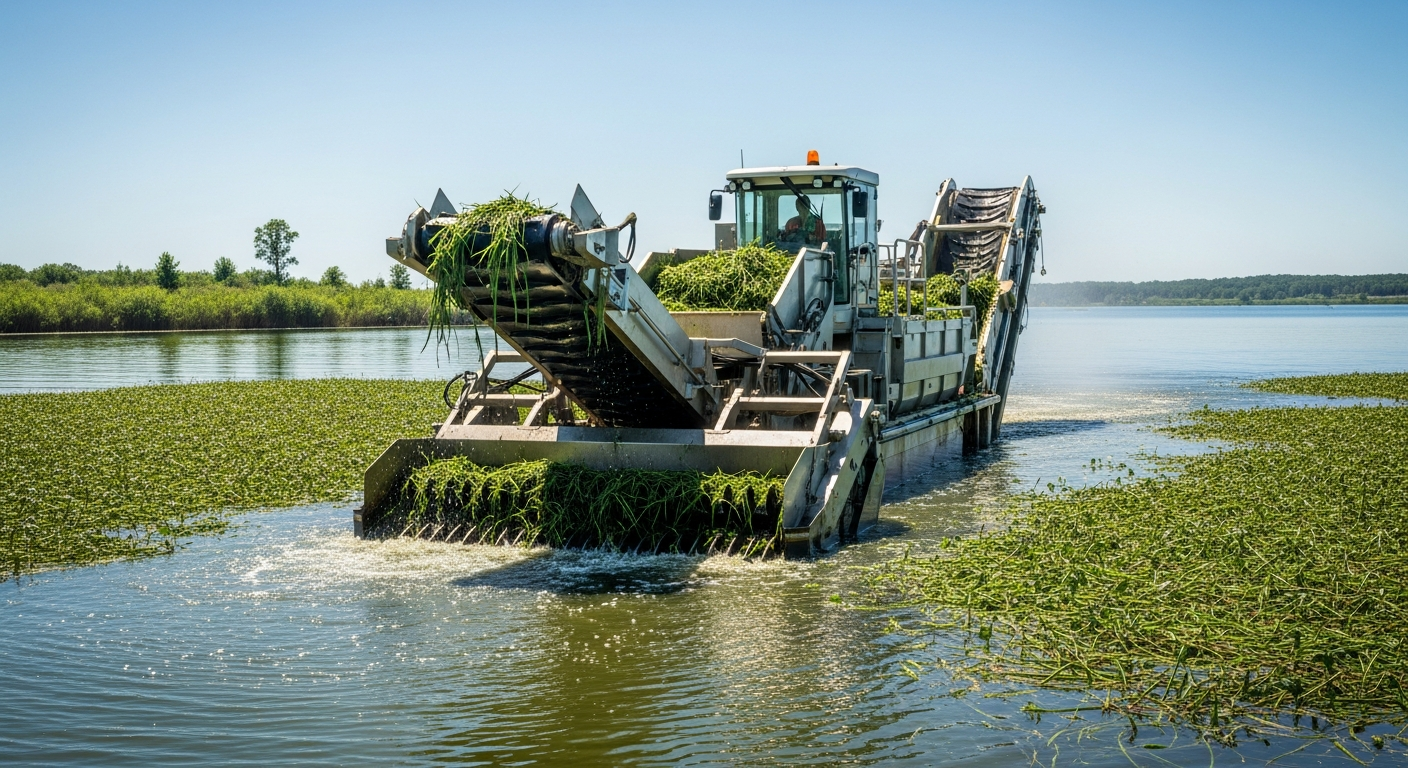
Overview of Mechanical Control
Mechanical removal refers to physical methods used to reduce Hydrilla verticillata biomass in freshwater systems. These techniques are often employed to restore navigational access, reduce surface canopy formation, or supplement chemical and biological control strategies.
Unlike systemic herbicides, mechanical approaches typically provide immediate visual results but may not address underground tubers or long-term regrowth potential.
Mechanical harvesting alone rarely eliminates hydrilla. See our full hydrilla removal strategy guide.
Aquatic Plant Harvesting
Mechanical harvesters are specialized vessels equipped with cutting bars and conveyor systems designed to remove submerged vegetation. Harvesting can reduce dense surface mats and improve recreational access.
However, cutting operations can generate plant fragments. Because Hydrilla reproduces through fragmentation, improperly managed harvesting activities may unintentionally contribute to spread.
The plant’s ability to regenerate from small stem segments is discussed in the Hydrilla reproduction section.
Raking and Localized Removal
In small ponds or localized infestations, manual raking or suction-based removal systems may be used. These methods are generally limited in scale and effectiveness.
Fragment containment is critical when using small-scale mechanical approaches to prevent downstream establishment.
Sediment Dredging
In some cases, dredging may be employed to remove Hydrilla tubers embedded in sediments. Because tubers can remain viable for multiple growing seasons, sediment disturbance may reduce regrowth potential.
Dredging operations are typically expensive and environmentally disruptive, requiring regulatory approval and environmental review.
Tubers and their long-term viability are explained in the Hydrilla tuber biology section.
Water Level Drawdown
Controlled water level reductions may expose Hydrilla to desiccation or freezing conditions in certain climates. Drawdown strategies are most effective in regions with seasonal temperature variation.
In warmer climates, drawdowns may reduce surface biomass but often fail to eliminate subterranean reproductive structures.
Ecological Considerations
Mechanical removal can temporarily improve water circulation and access but may also disturb sediments, increase turbidity, and affect non-target vegetation.
Habitat disruption and changes in fish community structure are discussed further in the Hydrilla ecological impact section.
Integration Within IPM Programs
Mechanical removal is most effective when integrated with chemical and biological control strategies. Combining harvesting with systemic herbicide treatment or biological grazing may improve long-term outcomes.
Chemical control options are outlined in the herbicides section, while biological control using triploid grass carp is discussed separately.
Broader strategic planning considerations are covered in the lake management section.
References
Information presented on this page is supported by peer-reviewed research, federal agencies, and state resource management programs.
- U.S. Geological Survey (USGS) – Nonindigenous Aquatic Species Databasehttps://nas.er.usgs.gov
- U.S. Army Corps of Engineers – Aquatic Plant Control Research Programhttps://www.erdc.usace.army.mil
- NOAA Aquatic Invasive Species Programhttps://www.noaa.gov