Economic Impact of Hydrilla
Analysis of the economic costs associated with Hydrilla verticillata infestations, including management expenditures, recreational losses, infrastructure impacts, and long-term fiscal considerations.
Overview of Economic Burden
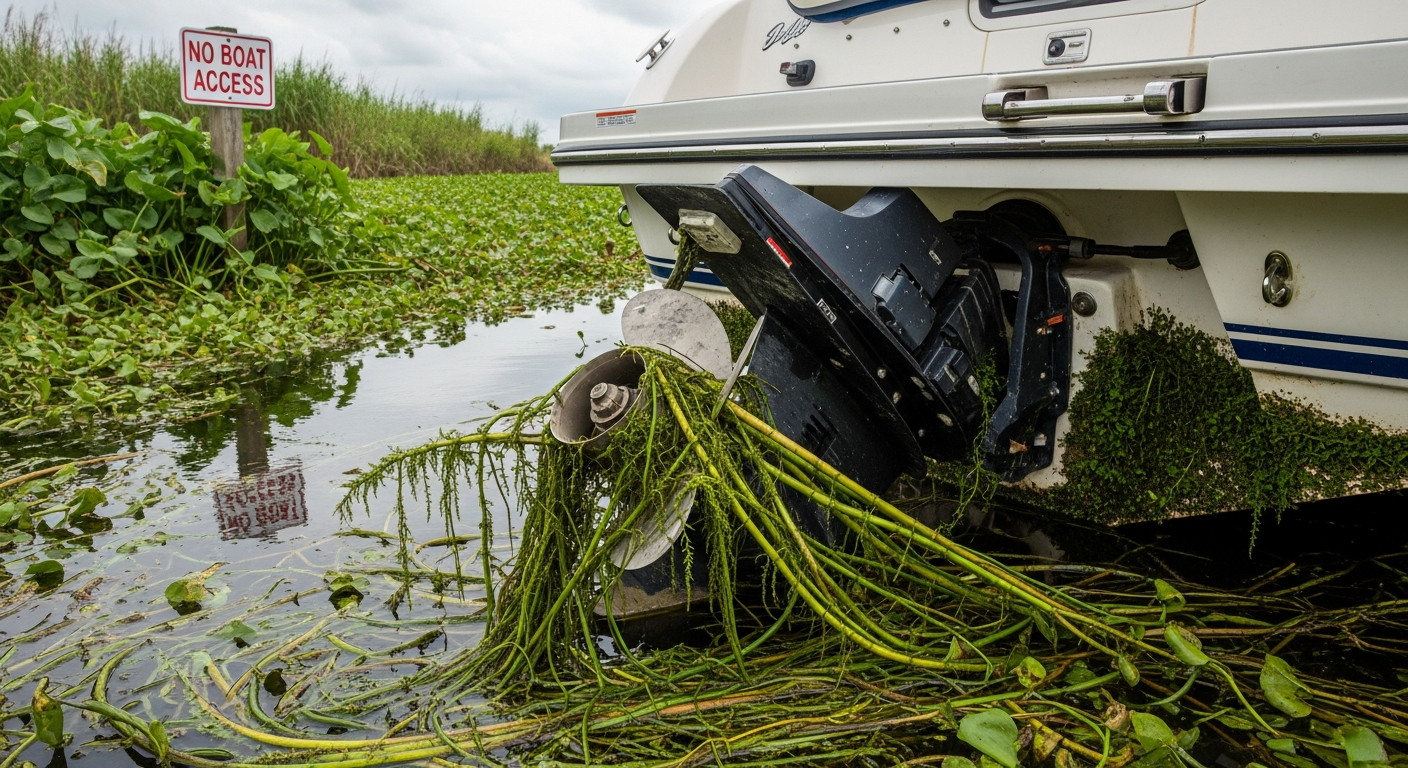
Hydrilla verticillata imposes substantial economic costs on states, municipalities, and private stakeholders. Financial impacts stem from management expenditures, reduced recreational access, infrastructure interference, and long-term ecosystem degradation.
Because Hydrilla infestations often require recurring treatment, management costs may extend over decades.
A full overview of the species is provided in the Hydrilla master guide.
Management Expenditures
Aquatic vegetation management programs targeting Hydrilla may involve herbicide procurement, contracted treatment services, monitoring programs, biological stocking initiatives, and mechanical harvesting operations.
In heavily infested states such as Florida and Texas, annual management budgets can reach millions of dollars.
Management strategies are outlined in the Hydrilla control and management section.
Recreational and Tourism Losses
Dense surface mats can obstruct boating, swimming, and fishing activities. Reduced access to recreational waterways may negatively affect tourism-dependent communities.
Marinas and boat rental operations may incur additional costs associated with clearing navigation channels or relocating equipment.
Regional distribution patterns that influence tourism exposure are described in the Hydrilla distribution section.
Shoreline Property Values
In some cases, extensive aquatic vegetation may reduce waterfront property appeal due to limited access, visual obstruction, or odor associated with decaying biomass.
However, economic outcomes vary depending on management intensity, water clarity, and fishery conditions.
Municipal and Infrastructure Impacts
Hydrilla can interfere with municipal water intake structures, irrigation systems, and flood-control infrastructure. Maintenance crews may be required to clear clogged systems.
In large reservoirs, vegetation management is often integrated into broader water resource planning initiatives.
Long-Term Fiscal Considerations
Because Hydrilla is capable of persistent regrowth from sediment tubers, long-term suppression requires sustained funding and adaptive management.
The biological resilience contributing to ongoing costs is discussed in the Hydrilla biology section.
Ecological consequences that indirectly influence economic outcomes are detailed in the ecological impact section.
References
Information presented on this page is supported by peer-reviewed research, federal agencies, and state resource management programs.
- U.S. Geological Survey (USGS) – Nonindigenous Aquatic Species Databasehttps://nas.er.usgs.gov
- U.S. Army Corps of Engineers – Aquatic Plant Control Research Programhttps://www.erdc.usace.army.mil
- NOAA Aquatic Invasive Species Programhttps://www.noaa.gov