Comprehensive Lake Management
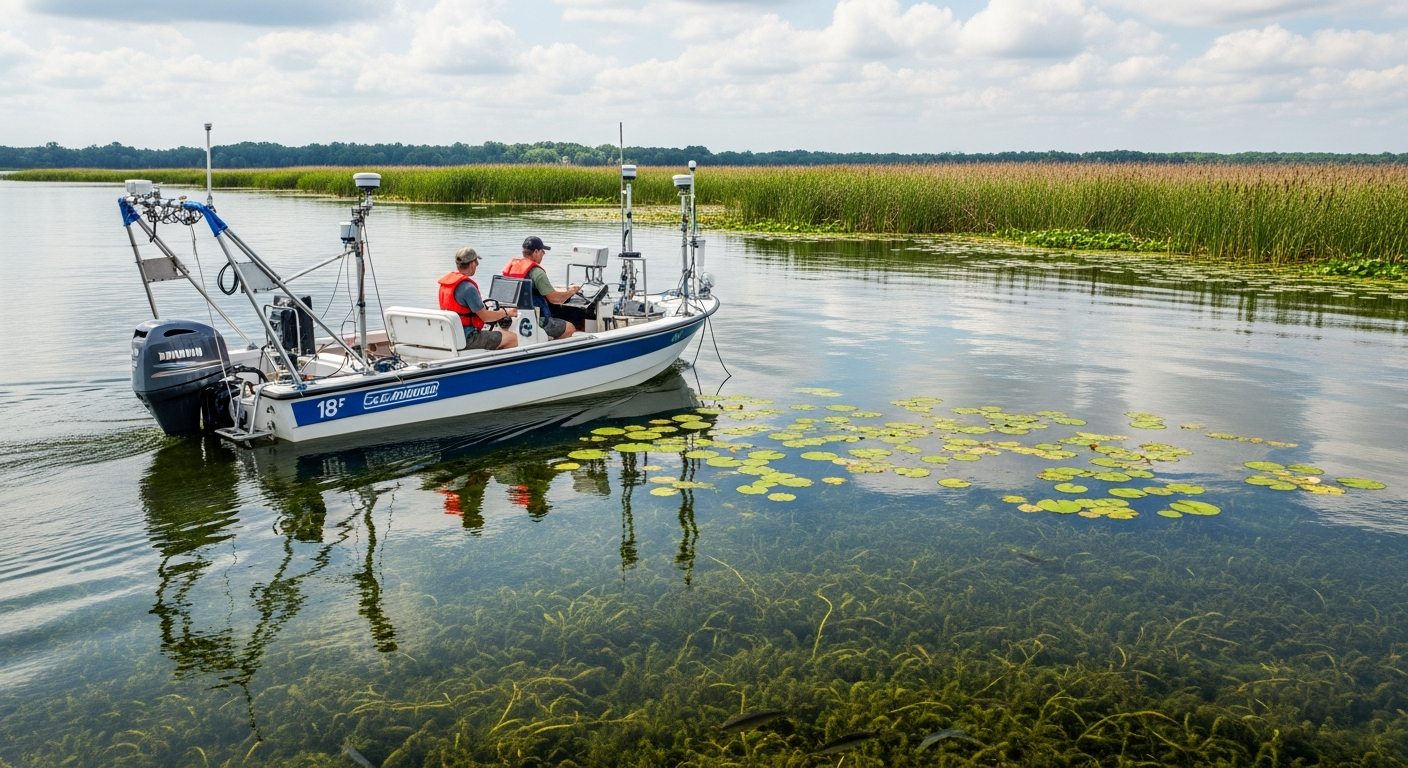
Integrated Lake Management
Effective lake management requires a holistic approach that goes beyond simply treating the symptoms of poor water quality or invasive species outbreaks. An Integrated Pest Management (IPM) plan combines multiple strategies to achieve long-term ecological balance.
Key Components of a Management Plan
- Monitoring & Assessment: Regular surveying of water quality, native plant populations, and early detection of invasives like Hydrilla.
- Nutrient Remediation: Addressing the root cause of excessive plant and algae growth by reducing phosphorus and nitrogen inputs from fertilizer runoff.
- Targeted Control: Utilizing chemical treatments, biological controls, or mechanical removal as appropriate for specific threats.
- Community Education: Informing stakeholders about prevention measures, such as "Clean, Drain, Dry" practices for boaters.
Managing Hydrilla in Lakes
Hydrilla poses a unique challenge to lake managers due to its rapid growth and tuber persistence. We have compiled a specific resource for dealing with this threat in our Hydrilla Lake Management Guide and our overview on Hydrilla Lake Damage.
Professional Hydrilla Removal Services
Dealing with a severe hydrilla infestation? DK Aquatic provides commercial-grade mechanical harvesting, pond removal, and comprehensive lake management services across the United States, specializing in California and high-priority zones.
Contact DK Aquatic for a ConsultationReferences
Information presented on this page is supported by peer-reviewed research, federal agencies, and state resource management programs.
- U.S. Geological Survey (USGS) – Nonindigenous Aquatic Species Databasehttps://nas.er.usgs.gov
- U.S. Army Corps of Engineers – Aquatic Plant Control Research Programhttps://www.erdc.usace.army.mil
- NOAA Aquatic Invasive Species Programhttps://www.noaa.gov