Pond Removal of Hydrilla: Small Waterbody Management
Discover mechanical strategies for removing hydrilla from small private ponds, including manual raking, benthic barriers, and small-scale harvesting.
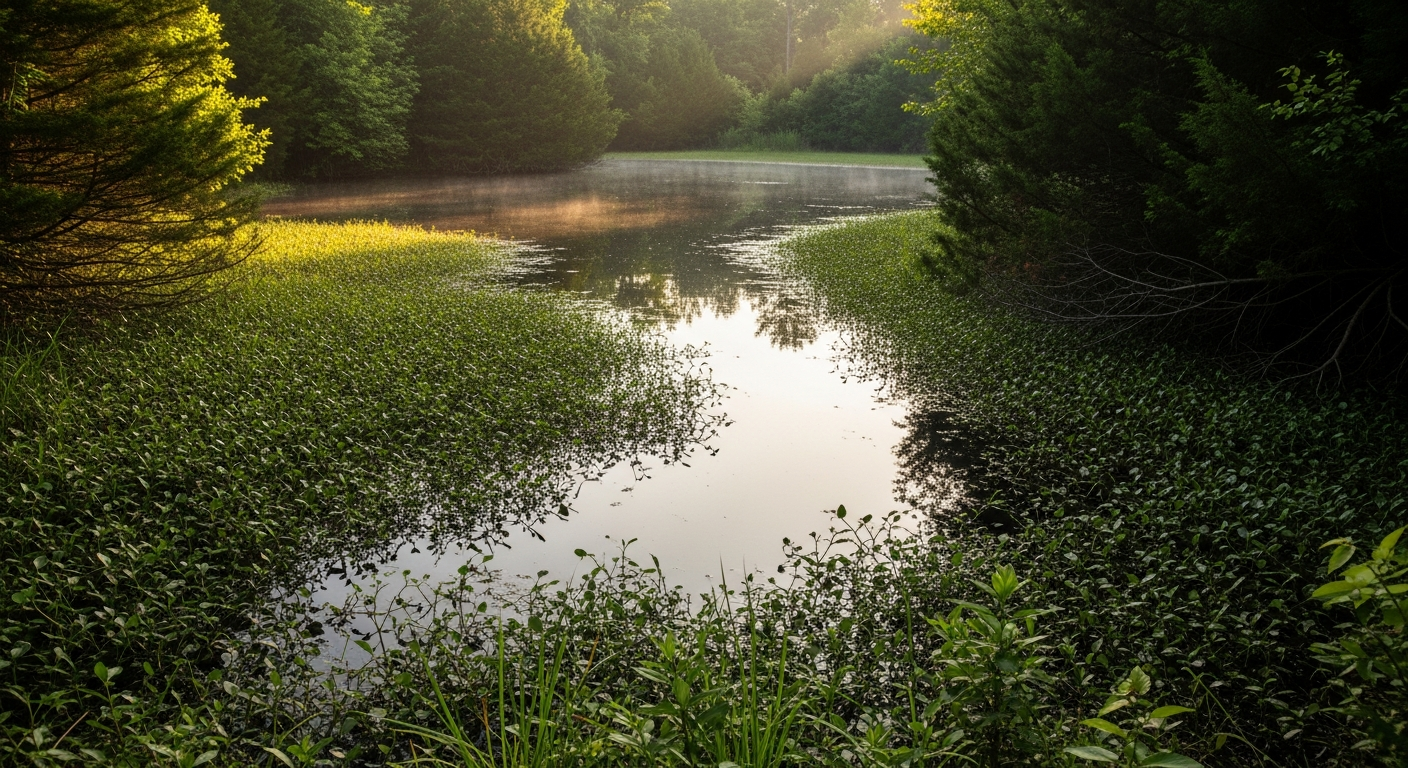
Managing Hydrilla in Private Ponds
Unlike massive public lakes that require million-dollar harvesting machines, small private ponds (typically under 2 acres) offer unique opportunities for manual and small-scale mechanical control of Hydrilla verticillata.
If you are looking to avoid aquatic herbicides, or if your pond is used for irrigation where chemical restrictions would be problematic, manual removal techniques can provide immediate relief.
Manual Raking and Pulling
For very small ponds or clearing a specific dock area, aquatic weed rakes and cutters can be effective. These tools are thrown into the water and dragged back to shore, cutting or pulling the vegetation.
- The Pros: Immediate results. Zero chemical restrictions. Relatively inexpensive equipment.
- The Cons: Incredibly labor-intensive. Hydrilla is 90% water and extremely heavy to haul onto shore. The roots remain, so it will grow back quickly.
- Best Practice: Ensure you remove all cut fragments from the water with a skimming net to prevent them from rooting elsewhere. Leave the pulled weeds on the bank for a day to dry out and lighten before transporting them to a compost pile.
Benthic Barriers (Bottom Mats)
Benthic barriers are large, heavy, opaque mats placed directly on the pond floor. They work by compressing the hydrilla and blocking 100% of the sunlight, effectively starving the plants underneath.
- Effectiveness: Highly effective for localized control (e.g., around a swimming area or boat launch).
- Installation: They must be securely staked or weighted down. Gases from decaying plant matter can build up underneath, causing the mats to float if not properly secured.
- Maintenance: Silt will eventually accumulate on top of the mats, allowing new hydrilla fragments to root. They need to be removed and cleaned periodically.
When to Consider Other Options
If your pond is entirely choked with hydrilla, manual raking is likely a losing battle against the plant's rapid growth rate (up to an inch a day).
For whole-pond infestations, you should evaluate stocking triploid grass carp for long-term biological control, or utilizing a targeted aquatic herbicide treatment.
Explore Related Topics
Professional Hydrilla Removal Services
Dealing with a severe hydrilla infestation? DK Aquatic provides commercial-grade mechanical harvesting, pond removal, and comprehensive lake management services across the United States, specializing in California and high-priority zones.
Contact DK Aquatic for a ConsultationReferences
Information presented on this page is supported by peer-reviewed research, federal agencies, and state resource management programs.
- U.S. Geological Survey (USGS) – Nonindigenous Aquatic Species Databasehttps://nas.er.usgs.gov
- U.S. Army Corps of Engineers – Aquatic Plant Control Research Programhttps://www.erdc.usace.army.mil
- NOAA Aquatic Invasive Species Programhttps://www.noaa.gov